
Get trending papers in your email inbox once a day!
Get trending papers in your email inbox!
Subscribe

Physics-based parameterized neural ordinary differential equations: prediction of laser ignition in a rocket combustor
In this work, we present a novel physics-based data-driven framework for reduced-order modeling of laser ignition in a model rocket combustor based on parameterized neural ordinary differential equations (PNODE). Deep neural networks are embedded as functions of high-dimensional parameters of laser ignition to predict various terms in a 0D flow model including the heat source function, pre-exponential factors, and activation energy. Using the governing equations of a 0D flow model, our PNODE needs only a limited number of training samples and predicts trajectories of various quantities such as temperature, pressure, and mass fractions of species while satisfying physical constraints. We validate our physics-based PNODE on solution snapshots of high-fidelity Computational Fluid Dynamics (CFD) simulations of laser-induced ignition in a prototype rocket combustor. We compare the performance of our physics-based PNODE with that of kernel ridge regression and fully connected neural networks. Our results show that our physics-based PNODE provides solutions with lower mean absolute errors of average temperature over time, thus improving the prediction of successful laser ignition with high-dimensional parameters.
Fusion-DeepONet: A Data-Efficient Neural Operator for Geometry-Dependent Hypersonic and Supersonic Flows
Shape optimization is essential in aerospace vehicle design, including reentry systems, and propulsion system components, as it directly influences aerodynamic efficiency, structural integrity, and overall mission success. Rapid and accurate prediction of external and internal flows accelerates design iterations. To this end, we develop a new variant of DeepONet, called Fusion-DeepONet as a fast surrogate model for geometry-dependent hypersonic and supersonic flow fields. We evaluated Fusion-DeepONet in learning two external hypersonic flows and a supersonic shape-dependent internal flow problem. First, we compare the performance of Fusion-DeepONet with state-of-the-art neural operators to learn inviscid hypersonic flow around semi-elliptic blunt bodies for two grid types: uniform Cartesian and irregular grids. Fusion-DeepONet provides comparable accuracy to parameter-conditioned U-Net on uniform grids while outperforming MeshGraphNet and Vanilla-DeepONet on irregular grids. Fusion-DeepONet requires significantly fewer trainable parameters than U-Net, MeshGraphNet, and FNO. For the second hypersonic problem, we set up Fusion-DeepONet to map from geometry and free stream Mach number to the temperature field around a reentry capsule traveling at hypersonic speed. This fast surrogate is then improved to predict the spatial derivative of the temperature, resulting in an accurate prediction of heat flux at the surfaces of the capsule. To enhance the accuracy of spatial derivative prediction, we introduce a derivative-enhanced loss term with the least computation overhead. For the third problem, we show that Fusion-DeepONet outperforms MeshGraphNet in learning geometry-dependent supersonic flow in a converging-diverging nozzle configuration. For all the problems, we used high-fidelity simulations with a high-order entropy-stable DGSEM solver to generate training datasets with limited samples.

Fully Compressible Magnetohydrodynamic Simulations of Solar Convection Zones with CHORUS++
The objective of this study is to develop a fully compressible magnetohydrodynamic solver for fast simulations of the global dynamo of the Sun using unstructured grids and GPUs. Accurate modeling of the Sun's convective layers is vital to predicting the Sun's behavior, including the solar dynamo and sunspot cycles. Currently, there are many efficient codes capable of conducting these large simulations; however, many assume an anealastic density distribution. The anelastic assumption is capable of producing accurate results for low mach numbers; however, it fails in regions with a higher mach number and a fully compressible flow must be considered. To avoid these issues, Wang et al. [1] created a Compressible High-ORder Unstructured Spectral difference (CHORUS) code for simulating fluid dynamics inside stars and planets. CHORUS++ augmented the CHORUS code to adopt a higher degree of polynomials by using cubed-sphere meshing and transfinite mapping to perform simulations on unstructured grids [2]. Recently, CHORUS++ was further developed for parallel magnetohydrodynamic (MHD) solutions on GPUs at Clarkson University. In this study the solar benchmark problems presented by Chen et al. [2] are extended to unsteady solar dynamo problems, with two different density scale heights. The CHORUS-MHD code is further accelerated by multiple GPUs and used to successfully solve these solar dynamo benchmark problems. [1] Wang, J., Liang, C., and Miesch, M. S., "A Compressible High-Order Unstructured Spectral Difference Code for Stratified Convection in Rotating Spherical Shells," Journal of Computational Physics, Vol. 290, 2015, pp. 90-111. [2] Chen, K., Liang, C., and Wan, M., "Arbitrarily high-order accurate simulations of compressible rotationally constrained convection using a transfinite mapping on cubed-sphere grids," Physics of Fluids, Vol. 35, 2023, p. 086120.
Uncertainty Quantification for Multi-fidelity Simulations
The work focuses on gathering high-fidelity and low-fidelity numerical simulations data using Nektar++ (Solver based on Applied Mathematics) and XFOIL respectively. The utilization of the higher polynomial distribution in calculating the Coefficient of lift and drag has demonstrated superior accuracy and precision. Further, Co-kriging Data fusion and Adaptive sampling technique has been used to obtain the precise data predictions for the lift and drag within the confined domain without conducting the costly simulations on HPC clusters. This creates a methodology to quantifying uncertainty in computational fluid dynamics by minimizing the required number of samples. To minimize the reliability on high-fidelity numerical simulations in Uncertainty Quantification, a multi-fidelity strategy has been adopted. The effectiveness of the multi-fidelity deep neural network model has been validated through the approximation of benchmark functions across 1-, 32-, and 100-dimensional, encompassing both linear and nonlinear correlations. The surrogate modelling results showed that multi-fidelity deep neural network model has shown excellent approximation capabilities for the test functions and multi-fidelity deep neural network method has outperformed Co-kriging in effectiveness. In addition to that, multi-fidelity deep neural network model is utilized for the simulation of aleatory uncertainty propagation in 1-, 32-, and 100 dimensional function test, considering both uniform and Gaussian distributions for input uncertainties. The results have shown that multi-fidelity deep neural network model has efficiently predicted the probability density distributions of quantities of interest as well as the statistical moments with precision and accuracy. The Co-Kriging model has exhibited limitations when addressing 32-Dimension problems due to the limitation of memory capacity for storage and manipulation.
Predicting Time-Dependent Flow Over Complex Geometries Using Operator Networks
Fast, geometry-generalizing surrogates for unsteady flow remain challenging. We present a time-dependent, geometry-aware Deep Operator Network that predicts velocity fields for moderate-Re flows around parametric and non-parametric shapes. The model encodes geometry via a signed distance field (SDF) trunk and flow history via a CNN branch, trained on 841 high-fidelity simulations. On held-out shapes, it attains sim 5% relative L2 single-step error and up to 1000X speedups over CFD. We provide physics-centric rollout diagnostics, including phase error at probes and divergence norms, to quantify long-horizon fidelity. These reveal accurate near-term transients but error accumulation in fine-scale wakes, most pronounced for sharp-cornered geometries. We analyze failure modes and outline practical mitigations. Code, splits, and scripts are openly released at: https://github.com/baskargroup/TimeDependent-DeepONet to support reproducibility and benchmarking.
Towards scalable surrogate models based on Neural Fields for large scale aerodynamic simulations
This paper introduces a novel surrogate modeling framework for aerodynamic applications based on Neural Fields. The proposed approach, MARIO (Modulated Aerodynamic Resolution Invariant Operator), addresses non parametric geometric variability through an efficient shape encoding mechanism and exploits the discretization-invariant nature of Neural Fields. It enables training on significantly downsampled meshes, while maintaining consistent accuracy during full-resolution inference. These properties allow for efficient modeling of diverse flow conditions, while reducing computational cost and memory requirements compared to traditional CFD solvers and existing surrogate methods. The framework is validated on two complementary datasets that reflect industrial constraints. First, the AirfRANS dataset consists in a two-dimensional airfoil benchmark with non-parametric shape variations. Performance evaluation of MARIO on this case demonstrates an order of magnitude improvement in prediction accuracy over existing methods across velocity, pressure, and turbulent viscosity fields, while accurately capturing boundary layer phenomena and aerodynamic coefficients. Second, the NASA Common Research Model features three-dimensional pressure distributions on a full aircraft surface mesh, with parametric control surface deflections. This configuration confirms MARIO's accuracy and scalability. Benchmarking against state-of-the-art methods demonstrates that Neural Field surrogates can provide rapid and accurate aerodynamic predictions under the computational and data limitations characteristic of industrial applications.

Disentangled Multi-Fidelity Deep Bayesian Active Learning
To balance quality and cost, various domain areas of science and engineering run simulations at multiple levels of sophistication. Multi-fidelity active learning aims to learn a direct mapping from input parameters to simulation outputs at the highest fidelity by actively acquiring data from multiple fidelity levels. However, existing approaches based on Gaussian processes are hardly scalable to high-dimensional data. Deep learning-based methods often impose a hierarchical structure in hidden representations, which only supports passing information from low-fidelity to high-fidelity. These approaches can lead to the undesirable propagation of errors from low-fidelity representations to high-fidelity ones. We propose a novel framework called Disentangled Multi-fidelity Deep Bayesian Active Learning (D-MFDAL), which learns the surrogate models conditioned on the distribution of functions at multiple fidelities. On benchmark tasks of learning deep surrogates of partial differential equations including heat equation, Poisson's equation and fluid simulations, our approach significantly outperforms state-of-the-art in prediction accuracy and sample efficiency.

Multi-Fidelity Reinforcement Learning for Time-Optimal Quadrotor Re-planning
High-speed online trajectory planning for UAVs poses a significant challenge due to the need for precise modeling of complex dynamics while also being constrained by computational limitations. This paper presents a multi-fidelity reinforcement learning method (MFRL) that aims to effectively create a realistic dynamics model and simultaneously train a planning policy that can be readily deployed in real-time applications. The proposed method involves the co-training of a planning policy and a reward estimator; the latter predicts the performance of the policy's output and is trained efficiently through multi-fidelity Bayesian optimization. This optimization approach models the correlation between different fidelity levels, thereby constructing a high-fidelity model based on a low-fidelity foundation, which enables the accurate development of the reward model with limited high-fidelity experiments. The framework is further extended to include real-world flight experiments in reinforcement learning training, allowing the reward model to precisely reflect real-world constraints and broadening the policy's applicability to real-world scenarios. We present rigorous evaluations by training and testing the planning policy in both simulated and real-world environments. The resulting trained policy not only generates faster and more reliable trajectories compared to the baseline snap minimization method, but it also achieves trajectory updates in 2 ms on average, while the baseline method takes several minutes.
Forecasting Thermoacoustic Instabilities in Liquid Propellant Rocket Engines Using Multimodal Bayesian Deep Learning
The 100 MW cryogenic liquid oxygen/hydrogen multi-injector combustor BKD operated by the DLR Institute of Space Propulsion is a research platform that allows the study of thermoacoustic instabilities under realistic conditions, representative of small upper stage rocket engines. We use data from BKD experimental campaigns in which the static chamber pressure and fuel-oxidizer ratio are varied such that the first tangential mode of the combustor is excited under some conditions. We train an autoregressive Bayesian neural network model to forecast the amplitude of the dynamic pressure time series, inputting multiple sensor measurements (injector pressure/ temperature measurements, static chamber pressure, high-frequency dynamic pressure measurements, high-frequency OH* chemiluminescence measurements) and future flow rate control signals. The Bayesian nature of our algorithms allows us to work with a dataset whose size is restricted by the expense of each experimental run, without making overconfident extrapolations. We find that the networks are able to accurately forecast the evolution of the pressure amplitude and anticipate instability events on unseen experimental runs 500 milliseconds in advance. We compare the predictive accuracy of multiple models using different combinations of sensor inputs. We find that the high-frequency dynamic pressure signal is particularly informative. We also use the technique of integrated gradients to interpret the influence of different sensor inputs on the model prediction. The negative log-likelihood of data points in the test dataset indicates that predictive uncertainties are well-characterized by our Bayesian model and simulating a sensor failure event results as expected in a dramatic increase in the epistemic component of the uncertainty.
From Zero to Turbulence: Generative Modeling for 3D Flow Simulation
Simulations of turbulent flows in 3D are one of the most expensive simulations in computational fluid dynamics (CFD). Many works have been written on surrogate models to replace numerical solvers for fluid flows with faster, learned, autoregressive models. However, the intricacies of turbulence in three dimensions necessitate training these models with very small time steps, while generating realistic flow states requires either long roll-outs with many steps and significant error accumulation or starting from a known, realistic flow state - something we aimed to avoid in the first place. Instead, we propose to approach turbulent flow simulation as a generative task directly learning the manifold of all possible turbulent flow states without relying on any initial flow state. For our experiments, we introduce a challenging 3D turbulence dataset of high-resolution flows and detailed vortex structures caused by various objects and derive two novel sample evaluation metrics for turbulent flows. On this dataset, we show that our generative model captures the distribution of turbulent flows caused by unseen objects and generates high-quality, realistic samples amenable for downstream applications without access to any initial state.
DrivAerML: High-Fidelity Computational Fluid Dynamics Dataset for Road-Car External Aerodynamics
Machine Learning (ML) has the potential to revolutionise the field of automotive aerodynamics, enabling split-second flow predictions early in the design process. However, the lack of open-source training data for realistic road cars, using high-fidelity CFD methods, represents a barrier to their development. To address this, a high-fidelity open-source (CC-BY-SA) public dataset for automotive aerodynamics has been generated, based on 500 parametrically morphed variants of the widely-used DrivAer notchback generic vehicle. Mesh generation and scale-resolving CFD was executed using consistent and validated automatic workflows representative of the industrial state-of-the-art. Geometries and rich aerodynamic data are published in open-source formats. To our knowledge, this is the first large, public-domain dataset for complex automotive configurations generated using high-fidelity CFD.
WindsorML: High-Fidelity Computational Fluid Dynamics Dataset For Automotive Aerodynamics
This paper presents a new open-source high-fidelity dataset for Machine Learning (ML) containing 355 geometric variants of the Windsor body, to help the development and testing of ML surrogate models for external automotive aerodynamics. Each Computational Fluid Dynamics (CFD) simulation was run with a GPU-native high-fidelity Wall-Modeled Large-Eddy Simulations (WMLES) using a Cartesian immersed-boundary method using more than 280M cells to ensure the greatest possible accuracy. The dataset contains geometry variants that exhibits a wide range of flow characteristics that are representative of those observed on road-cars. The dataset itself contains the 3D time-averaged volume & boundary data as well as the geometry and force & moment coefficients. This paper discusses the validation of the underlying CFD methods as well as contents and structure of the dataset. To the authors knowledge, this represents the first, large-scale high-fidelity CFD dataset for the Windsor body with a permissive open-source license (CC-BY-SA).

Aero-Nef: Neural Fields for Rapid Aircraft Aerodynamics Simulations
This paper presents a methodology to learn surrogate models of steady state fluid dynamics simulations on meshed domains, based on Implicit Neural Representations (INRs). The proposed models can be applied directly to unstructured domains for different flow conditions, handle non-parametric 3D geometric variations, and generalize to unseen shapes at test time. The coordinate-based formulation naturally leads to robustness with respect to discretization, allowing an excellent trade-off between computational cost (memory footprint and training time) and accuracy. The method is demonstrated on two industrially relevant applications: a RANS dataset of the two-dimensional compressible flow over a transonic airfoil and a dataset of the surface pressure distribution over 3D wings, including shape, inflow condition, and control surface deflection variations. On the considered test cases, our approach achieves a more than three times lower test error and significantly improves generalization error on unseen geometries compared to state-of-the-art Graph Neural Network architectures. Remarkably, the method can perform inference five order of magnitude faster than the high fidelity solver on the RANS transonic airfoil dataset. Code is available at https://gitlab.isae-supaero.fr/gi.catalani/aero-nepf
Synthetic Video Enhances Physical Fidelity in Video Synthesis
We investigate how to enhance the physical fidelity of video generation models by leveraging synthetic videos derived from computer graphics pipelines. These rendered videos respect real-world physics, such as maintaining 3D consistency, and serve as a valuable resource that can potentially improve video generation models. To harness this potential, we propose a solution that curates and integrates synthetic data while introducing a method to transfer its physical realism to the model, significantly reducing unwanted artifacts. Through experiments on three representative tasks emphasizing physical consistency, we demonstrate its efficacy in enhancing physical fidelity. While our model still lacks a deep understanding of physics, our work offers one of the first empirical demonstrations that synthetic video enhances physical fidelity in video synthesis. Website: https://kevinz8866.github.io/simulation/


First principles simulations of dense hydrogen
Accurate knowledge of the properties of hydrogen at high compression is crucial for astrophysics (e.g. planetary and stellar interiors, brown dwarfs, atmosphere of compact stars) and laboratory experiments, including inertial confinement fusion. There exists experimental data for the equation of state, conductivity, and Thomson scattering spectra. However, the analysis of the measurements at extreme pressures and temperatures typically involves additional model assumptions, which makes it difficult to assess the accuracy of the experimental data. rigorously. On the other hand, theory and modeling have produced extensive collections of data. They originate from a very large variety of models and simulations including path integral Monte Carlo (PIMC) simulations, density functional theory (DFT), chemical models, machine-learned models, and combinations thereof. At the same time, each of these methods has fundamental limitations (fermion sign problem in PIMC, approximate exchange-correlation functionals of DFT, inconsistent interaction energy contributions in chemical models, etc.), so for some parameter ranges accurate predictions are difficult. Recently, a number of breakthroughs in first principle PIMC and DFT simulations were achieved which are discussed in this review. Here we use these results to benchmark different simulation methods. We present an update of the hydrogen phase diagram at high pressures, the expected phase transitions, and thermodynamic properties including the equation of state and momentum distribution. Furthermore, we discuss available dynamic results for warm dense hydrogen, including the conductivity, dynamic structure factor, plasmon dispersion, imaginary-time structure, and density response functions. We conclude by outlining strategies to combine different simulations to achieve accurate theoretical predictions.
kh2d-solver: A Python Library for Idealized Two-Dimensional Incompressible Kelvin-Helmholtz Instability
We present an open-source Python library for simulating two-dimensional incompressible Kelvin-Helmholtz instabilities in stratified shear flows. The solver employs a fractional-step projection method with spectral Poisson solution via Fast Sine Transform, achieving second-order spatial accuracy. Implementation leverages NumPy, SciPy, and Numba JIT compilation for efficient computation. Four canonical test cases explore Reynolds numbers 1000--5000 and Richardson numbers 0.1--0.3: classical shear layer, double shear configuration, rotating flow, and forced turbulence. Statistical analysis using Shannon entropy and complexity indices reveals that double shear layers achieve 2.8times higher mixing rates than forced turbulence despite lower Reynolds numbers. The solver runs efficiently on standard desktop hardware, with 384times192 grid simulations completing in approximately 31 minutes. Results demonstrate that mixing efficiency depends on instability generation pathways rather than intensity measures alone, challenging Richardson number-based parameterizations and suggesting refinements for subgrid-scale representation in climate models.

Geometry aware inference of steady state PDEs using Equivariant Neural Fields representations
Recent advances in Neural Fields have enabled powerful, discretization-invariant methods for learning neural operators that approximate solutions of Partial Differential Equations (PDEs) on general geometries. Building on these developments, we introduce enf2enf, an encoder--decoder methodology for predicting steady-state Partial Differential Equations with non-parameterized geometric variability, based on recently proposed Equivariant Neural Field architectures. In enf2enf, input geometries are encoded into latent point cloud embeddings that inherently preserve geometric grounding and capture local phenomena. The resulting representations are then combined with global parameters and directly decoded into continuous output fields, thus efficiently modeling the coupling between geometry and physics. By leveraging the inductive biases of locality and translation invariance, our approach is able to capture fine-scale physical features as well as complex shape variations, thereby enhancing generalization and physical compliance. Extensive experiments on a high-fidelity aerodynamic dataset, a hyper-elastic material benchmark, and multi-element airfoil geometries, demonstrate that the proposed model achieves superior or competitive performance compared to state-of-the-art graph based, operator learning, and neural field methods. Notably, our method supports real time inference and zero-shot super-resolution, enabling efficient training on low-resolution meshes while maintaining high accuracy on full-scale discretizations.
Evaluation of Surrogate Models for Multi-fin Flapping Propulsion Systems
The aim of this study is to develop surrogate models for quick, accurate prediction of thrust forces generated through flapping fin propulsion for given operating conditions and fin geometries. Different network architectures and configurations are explored to model the training data separately for the lead fin and rear fin of a tandem fin setup. We progressively improve the data representation of the input parameter space for model predictions. The models are tested on three unseen fin geometries and the predictions validated with computational fluid dynamics (CFD) data. Finally, the orders of magnitude gains in computational performance of these surrogate models, compared to experimental and CFD runs, vs their tradeoff with accuracy is discussed within the context of this tandem fin configuration.
Freditor: High-Fidelity and Transferable NeRF Editing by Frequency Decomposition
This paper enables high-fidelity, transferable NeRF editing by frequency decomposition. Recent NeRF editing pipelines lift 2D stylization results to 3D scenes while suffering from blurry results, and fail to capture detailed structures caused by the inconsistency between 2D editings. Our critical insight is that low-frequency components of images are more multiview-consistent after editing compared with their high-frequency parts. Moreover, the appearance style is mainly exhibited on the low-frequency components, and the content details especially reside in high-frequency parts. This motivates us to perform editing on low-frequency components, which results in high-fidelity edited scenes. In addition, the editing is performed in the low-frequency feature space, enabling stable intensity control and novel scene transfer. Comprehensive experiments conducted on photorealistic datasets demonstrate the superior performance of high-fidelity and transferable NeRF editing. The project page is at https://aigc3d.github.io/freditor.

Learning Flexible Body Collision Dynamics with Hierarchical Contact Mesh Transformer
Recently, many mesh-based graph neural network (GNN) models have been proposed for modeling complex high-dimensional physical systems. Remarkable achievements have been made in significantly reducing the solving time compared to traditional numerical solvers. These methods are typically designed to i) reduce the computational cost in solving physical dynamics and/or ii) propose techniques to enhance the solution accuracy in fluid and rigid body dynamics. However, it remains under-explored whether they are effective in addressing the challenges of flexible body dynamics, where instantaneous collisions occur within a very short timeframe. In this paper, we present Hierarchical Contact Mesh Transformer (HCMT), which uses hierarchical mesh structures and can learn long-range dependencies (occurred by collisions) among spatially distant positions of a body -- two close positions in a higher-level mesh correspond to two distant positions in a lower-level mesh. HCMT enables long-range interactions, and the hierarchical mesh structure quickly propagates collision effects to faraway positions. To this end, it consists of a contact mesh Transformer and a hierarchical mesh Transformer (CMT and HMT, respectively). Lastly, we propose a flexible body dynamics dataset, consisting of trajectories that reflect experimental settings frequently used in the display industry for product designs. We also compare the performance of several baselines using well-known benchmark datasets. Our results show that HCMT provides significant performance improvements over existing methods. Our code is available at https://github.com/yuyudeep/hcmt.

Space and Time Continuous Physics Simulation From Partial Observations
Modern techniques for physical simulations rely on numerical schemes and mesh-refinement methods to address trade-offs between precision and complexity, but these handcrafted solutions are tedious and require high computational power. Data-driven methods based on large-scale machine learning promise high adaptivity by integrating long-range dependencies more directly and efficiently. In this work, we focus on fluid dynamics and address the shortcomings of a large part of the literature, which are based on fixed support for computations and predictions in the form of regular or irregular grids. We propose a novel setup to perform predictions in a continuous spatial and temporal domain while being trained on sparse observations. We formulate the task as a double observation problem and propose a solution with two interlinked dynamical systems defined on, respectively, the sparse positions and the continuous domain, which allows to forecast and interpolate a solution from the initial condition. Our practical implementation involves recurrent GNNs and a spatio-temporal attention observer capable of interpolating the solution at arbitrary locations. Our model not only generalizes to new initial conditions (as standard auto-regressive models do) but also performs evaluation at arbitrary space and time locations. We evaluate on three standard datasets in fluid dynamics and compare to strong baselines, which are outperformed both in classical settings and in the extended new task requiring continuous predictions.
Benchmarking the Processing of Aircraft Tracks with Triples Mode and Self-Scheduling
As unmanned aircraft systems (UASs) continue to integrate into the U.S. National Airspace System (NAS), there is a need to quantify the risk of airborne collisions between unmanned and manned aircraft to support regulation and standards development. Developing and certifying collision avoidance systems often rely on the extensive use of Monte Carlo collision risk analysis simulations using probabilistic models of aircraft flight. To train these models, high performance computing resources are required. We've prototyped a high performance computing workflow designed and deployed on the Lincoln Laboratory Supercomputing Center to process billions of observations of aircraft. However, the prototype has various computational and storage bottlenecks that limited rapid or more comprehensive analyses and models. In response, we have developed a novel workflow to take advantage of various job launch and task distribution technologies to improve performance. The workflow was benchmarked using two datasets of observations of aircraft, including a new dataset focused on the environment around aerodromes. Optimizing how the workflow was parallelized drastically reduced the execution time from weeks to days.

AB-UPT: Scaling Neural CFD Surrogates for High-Fidelity Automotive Aerodynamics Simulations via Anchored-Branched Universal Physics Transformers
Recent advances in neural surrogate modeling offer the potential for transformative innovations in applications such as automotive aerodynamics. Yet, industrial-scale problems often involve volumetric meshes with cell counts reaching the 100 millions, presenting major scalability challenges. Complex geometries further complicate modeling through intricate surface-volume interactions, while quantities such as vorticity are highly nonlinear and must satisfy strict divergence-free constraints. To address these requirements, we introduce AB-UPT as a novel modeling scheme for building neural surrogates for CFD simulations. AB-UPT is designed to: (i) decouple geometry encoding and prediction tasks via multi-branch operators; (ii) enable scalability to high-resolution outputs via neural simulation in a low-dimensional latent space, coupled with anchored neural field decoders to predict high-fidelity outputs; (iii) enforce physics consistency by a novel divergence-free formulation. We show that AB-UPT yields state-of-the-art predictive accuracy of surface and volume fields on automotive CFD simulations ranging from 33 thousand up to 150 million mesh cells. Furthermore, our anchored neural field architecture enables the enforcement of hard physical constraints on the physics predictions without degradation in performance, exemplified by modeling divergence-free vorticity fields. Notably, the proposed models can be trained on a single GPU in less than a day and predict industry-standard surface and volume fields within seconds. Additionally, we show that the flexible design of our method enables neural simulation from a CAD geometry alone, omitting the need for costly CFD meshing procedures.
GyroSwin: 5D Surrogates for Gyrokinetic Plasma Turbulence Simulations
Nuclear fusion plays a pivotal role in the quest for reliable and sustainable energy production. A major roadblock to viable fusion power is understanding plasma turbulence, which significantly impairs plasma confinement, and is vital for next-generation reactor design. Plasma turbulence is governed by the nonlinear gyrokinetic equation, which evolves a 5D distribution function over time. Due to its high computational cost, reduced-order models are often employed in practice to approximate turbulent transport of energy. However, they omit nonlinear effects unique to the full 5D dynamics. To tackle this, we introduce GyroSwin, the first scalable 5D neural surrogate that can model 5D nonlinear gyrokinetic simulations, thereby capturing the physical phenomena neglected by reduced models, while providing accurate estimates of turbulent heat transport.GyroSwin (i) extends hierarchical Vision Transformers to 5D, (ii) introduces cross-attention and integration modules for latent 3Dleftrightarrow5D interactions between electrostatic potential fields and the distribution function, and (iii) performs channelwise mode separation inspired by nonlinear physics. We demonstrate that GyroSwin outperforms widely used reduced numerics on heat flux prediction, captures the turbulent energy cascade, and reduces the cost of fully resolved nonlinear gyrokinetics by three orders of magnitude while remaining physically verifiable. GyroSwin shows promising scaling laws, tested up to one billion parameters, paving the way for scalable neural surrogates for gyrokinetic simulations of plasma turbulence.

Learning to Fly in Seconds
Learning-based methods, particularly Reinforcement Learning (RL), hold great promise for streamlining deployment, enhancing performance, and achieving generalization in the control of autonomous multirotor aerial vehicles. Deep RL has been able to control complex systems with impressive fidelity and agility in simulation but the simulation-to-reality transfer often brings a hard-to-bridge reality gap. Moreover, RL is commonly plagued by prohibitively long training times. In this work, we propose a novel asymmetric actor-critic-based architecture coupled with a highly reliable RL-based training paradigm for end-to-end quadrotor control. We show how curriculum learning and a highly optimized simulator enhance sample complexity and lead to fast training times. To precisely discuss the challenges related to low-level/end-to-end multirotor control, we also introduce a taxonomy that classifies the existing levels of control abstractions as well as non-linearities and domain parameters. Our framework enables Simulation-to-Reality (Sim2Real) transfer for direct RPM control after only 18 seconds of training on a consumer-grade laptop as well as its deployment on microcontrollers to control a multirotor under real-time guarantees. Finally, our solution exhibits competitive performance in trajectory tracking, as demonstrated through various experimental comparisons with existing state-of-the-art control solutions using a real Crazyflie nano quadrotor. We open source the code including a very fast multirotor dynamics simulator that can simulate about 5 months of flight per second on a laptop GPU. The fast training times and deployment to a cheap, off-the-shelf quadrotor lower the barriers to entry and help democratize the research and development of these systems.

A Two-Phase Deep Learning Framework for Adaptive Time-Stepping in High-Speed Flow Modeling
We consider the problem of modeling high-speed flows using machine learning methods. While most prior studies focus on low-speed fluid flows in which uniform time-stepping is practical, flows approaching and exceeding the speed of sound exhibit sudden changes such as shock waves. In such cases, it is essential to use adaptive time-stepping methods to allow a temporal resolution sufficient to resolve these phenomena while simultaneously balancing computational costs. Here, we propose a two-phase machine learning method, known as ShockCast, to model high-speed flows with adaptive time-stepping. In the first phase, we propose to employ a machine learning model to predict the timestep size. In the second phase, the predicted timestep is used as an input along with the current fluid fields to advance the system state by the predicted timestep. We explore several physically-motivated components for timestep prediction and introduce timestep conditioning strategies inspired by neural ODE and Mixture of Experts. As ShockCast is the first framework for learning high-speed flows, we evaluate our methods by generating two supersonic flow datasets, available at https://huggingface.co/datasets/divelab. Our code is publicly available as part of the AIRS library (https://github.com/divelab/AIRS).
Physics-aware generative models for turbulent fluid flows through energy-consistent stochastic interpolants
Generative models have demonstrated remarkable success in domains such as text, image, and video synthesis. In this work, we explore the application of generative models to fluid dynamics, specifically for turbulence simulation, where classical numerical solvers are computationally expensive. We propose a novel stochastic generative model based on stochastic interpolants, which enables probabilistic forecasting while incorporating physical constraints such as energy stability and divergence-freeness. Unlike conventional stochastic generative models, which are often agnostic to underlying physical laws, our approach embeds energy consistency by making the parameters of the stochastic interpolant learnable coefficients. We evaluate our method on a benchmark turbulence problem - Kolmogorov flow - demonstrating superior accuracy and stability over state-of-the-art alternatives such as autoregressive conditional diffusion models (ACDMs) and PDE-Refiner. Furthermore, we achieve stable results for significantly longer roll-outs than standard stochastic interpolants. Our results highlight the potential of physics-aware generative models in accelerating and enhancing turbulence simulations while preserving fundamental conservation properties.
AhmedML: High-Fidelity Computational Fluid Dynamics Dataset for Incompressible, Low-Speed Bluff Body Aerodynamics
The development of Machine Learning (ML) methods for Computational Fluid Dynamics (CFD) is currently limited by the lack of openly available training data. This paper presents a new open-source dataset comprising of high fidelity, scale-resolving CFD simulations of 500 geometric variations of the Ahmed Car Body - a simplified car-like shape that exhibits many of the flow topologies that are present on bluff bodies such as road vehicles. The dataset contains simulation results that exhibit a broad set of fundamental flow physics such as geometry and pressure-induced flow separation as well as 3D vortical structures. Each variation of the Ahmed car body were run using a high-fidelity, time-accurate, hybrid Reynolds-Averaged Navier-Stokes (RANS) - Large-Eddy Simulation (LES) turbulence modelling approach using the open-source CFD code OpenFOAM. The dataset contains boundary, volume, geometry, and time-averaged forces/moments in widely used open-source formats. In addition, the OpenFOAM case setup is provided so that others can reproduce or extend the dataset. This represents to the authors knowledge, the first open-source large-scale dataset using high-fidelity CFD methods for the widely used Ahmed car body that is available to freely download with a permissive license (CC-BY-SA).
Stable Score Distillation for High-Quality 3D Generation
Score Distillation Sampling (SDS) has exhibited remarkable performance in conditional 3D content generation. However, a comprehensive understanding of the SDS formulation is still lacking, hindering the development of 3D generation. In this work, we present an interpretation of SDS as a combination of three functional components: mode-disengaging, mode-seeking and variance-reducing terms, and analyze the properties of each. We show that problems such as over-smoothness and color-saturation result from the intrinsic deficiency of the supervision terms and reveal that the variance-reducing term introduced by SDS is sub-optimal. Additionally, we shed light on the adoption of large Classifier-Free Guidance (CFG) scale for 3D generation. Based on the analysis, we propose a simple yet effective approach named Stable Score Distillation (SSD) which strategically orchestrates each term for high-quality 3D generation. Extensive experiments validate the efficacy of our approach, demonstrating its ability to generate high-fidelity 3D content without succumbing to issues such as over-smoothness and over-saturation, even under low CFG conditions with the most challenging NeRF representation.

Foam-Agent 2.0: An End-to-End Composable Multi-Agent Framework for Automating CFD Simulation in OpenFOAM
Computational Fluid Dynamics (CFD) is an essential simulation tool in engineering, yet its steep learning curve and complex manual setup create significant barriers. To address these challenges, we introduce Foam-Agent, a multi-agent framework that automates the entire end-to-end OpenFOAM workflow from a single natural language prompt. Our key innovations address critical gaps in existing systems: 1. An Comprehensive End-to-End Simulation Automation: Foam-Agent is the first system to manage the full simulation pipeline, including advanced pre-processing with a versatile Meshing Agent capable of handling external mesh files and generating new geometries via Gmsh, automatic generation of HPC submission scripts, and post-simulation visualization via ParaView. 2. Composable Service Architecture: Going beyond a monolithic agent, the framework uses Model Context Protocol (MCP) to expose its core functions as discrete, callable tools. This allows for flexible integration and use by other agentic systems, such as Claude-code, for more exploratory workflows. 3. High-Fidelity Configuration Generation: We achieve superior accuracy through a Hierarchical Multi-Index RAG for precise context retrieval and a dependency-aware generation process that ensures configuration consistency. Evaluated on a benchmark of 110 simulation tasks, Foam-Agent achieves an 88.2% success rate with Claude 3.5 Sonnet, significantly outperforming existing frameworks (55.5% for MetaOpenFOAM). Foam-Agent dramatically lowers the expertise barrier for CFD, demonstrating how specialized multi-agent systems can democratize complex scientific computing. The code is public at https://github.com/csml-rpi/Foam-Agent.
Learning Mesh-Based Simulation with Graph Networks
Mesh-based simulations are central to modeling complex physical systems in many disciplines across science and engineering. Mesh representations support powerful numerical integration methods and their resolution can be adapted to strike favorable trade-offs between accuracy and efficiency. However, high-dimensional scientific simulations are very expensive to run, and solvers and parameters must often be tuned individually to each system studied. Here we introduce MeshGraphNets, a framework for learning mesh-based simulations using graph neural networks. Our model can be trained to pass messages on a mesh graph and to adapt the mesh discretization during forward simulation. Our results show it can accurately predict the dynamics of a wide range of physical systems, including aerodynamics, structural mechanics, and cloth. The model's adaptivity supports learning resolution-independent dynamics and can scale to more complex state spaces at test time. Our method is also highly efficient, running 1-2 orders of magnitude faster than the simulation on which it is trained. Our approach broadens the range of problems on which neural network simulators can operate and promises to improve the efficiency of complex, scientific modeling tasks.
DISCOVERSE: Efficient Robot Simulation in Complex High-Fidelity Environments
We present the first unified, modular, open-source 3DGS-based simulation framework for Real2Sim2Real robot learning. It features a holistic Real2Sim pipeline that synthesizes hyper-realistic geometry and appearance of complex real-world scenarios, paving the way for analyzing and bridging the Sim2Real gap. Powered by Gaussian Splatting and MuJoCo, Discoverse enables massively parallel simulation of multiple sensor modalities and accurate physics, with inclusive supports for existing 3D assets, robot models, and ROS plugins, empowering large-scale robot learning and complex robotic benchmarks. Through extensive experiments on imitation learning, Discoverse demonstrates state-of-the-art zero-shot Sim2Real transfer performance compared to existing simulators. For code and demos: https://air-discoverse.github.io/.
Physics-informed Reduced Order Modeling of Time-dependent PDEs via Differentiable Solvers
Reduced-order modeling (ROM) of time-dependent and parameterized differential equations aims to accelerate the simulation of complex high-dimensional systems by learning a compact latent manifold representation that captures the characteristics of the solution fields and their time-dependent dynamics. Although high-fidelity numerical solvers generate the training datasets, they have thus far been excluded from the training process, causing the learned latent dynamics to drift away from the discretized governing physics. This mismatch often limits generalization and forecasting capabilities. In this work, we propose Physics-informed ROM (Φ-ROM) by incorporating differentiable PDE solvers into the training procedure. Specifically, the latent space dynamics and its dependence on PDE parameters are shaped directly by the governing physics encoded in the solver, ensuring a strong correspondence between the full and reduced systems. Our model outperforms state-of-the-art data-driven ROMs and other physics-informed strategies by accurately generalizing to new dynamics arising from unseen parameters, enabling long-term forecasting beyond the training horizon, maintaining continuity in both time and space, and reducing the data cost. Furthermore, Φ-ROM learns to recover and forecast the solution fields even when trained or evaluated with sparse and irregular observations of the fields, providing a flexible framework for field reconstruction and data assimilation. We demonstrate the framework's robustness across various PDE solvers and highlight its broad applicability by providing an open-source JAX implementation that is readily extensible to other PDE systems and differentiable solvers, available at https://phi-rom.github.io.

LatticeWorld: A Multimodal Large Language Model-Empowered Framework for Interactive Complex World Generation
Recent research has been increasingly focusing on developing 3D world models that simulate complex real-world scenarios. World models have found broad applications across various domains, including embodied AI, autonomous driving, entertainment, etc. A more realistic simulation with accurate physics will effectively narrow the sim-to-real gap and allow us to gather rich information about the real world conveniently. While traditional manual modeling has enabled the creation of virtual 3D scenes, modern approaches have leveraged advanced machine learning algorithms for 3D world generation, with most recent advances focusing on generative methods that can create virtual worlds based on user instructions. This work explores such a research direction by proposing LatticeWorld, a simple yet effective 3D world generation framework that streamlines the industrial production pipeline of 3D environments. LatticeWorld leverages lightweight LLMs (LLaMA-2-7B) alongside the industry-grade rendering engine (e.g., Unreal Engine 5) to generate a dynamic environment. Our proposed framework accepts textual descriptions and visual instructions as multimodal inputs and creates large-scale 3D interactive worlds with dynamic agents, featuring competitive multi-agent interaction, high-fidelity physics simulation, and real-time rendering. We conduct comprehensive experiments to evaluate LatticeWorld, showing that it achieves superior accuracy in scene layout generation and visual fidelity. Moreover, LatticeWorld achieves over a 90times increase in industrial production efficiency while maintaining high creative quality compared with traditional manual production methods. Our demo video is available at https://youtu.be/8VWZXpERR18
"PhyWorldBench": A Comprehensive Evaluation of Physical Realism in Text-to-Video Models
Video generation models have achieved remarkable progress in creating high-quality, photorealistic content. However, their ability to accurately simulate physical phenomena remains a critical and unresolved challenge. This paper presents PhyWorldBench, a comprehensive benchmark designed to evaluate video generation models based on their adherence to the laws of physics. The benchmark covers multiple levels of physical phenomena, ranging from fundamental principles like object motion and energy conservation to more complex scenarios involving rigid body interactions and human or animal motion. Additionally, we introduce a novel ""Anti-Physics"" category, where prompts intentionally violate real-world physics, enabling the assessment of whether models can follow such instructions while maintaining logical consistency. Besides large-scale human evaluation, we also design a simple yet effective method that could utilize current MLLM to evaluate the physics realism in a zero-shot fashion. We evaluate 12 state-of-the-art text-to-video generation models, including five open-source and five proprietary models, with a detailed comparison and analysis. we identify pivotal challenges models face in adhering to real-world physics. Through systematic testing of their outputs across 1,050 curated prompts-spanning fundamental, composite, and anti-physics scenarios-we identify pivotal challenges these models face in adhering to real-world physics. We then rigorously examine their performance on diverse physical phenomena with varying prompt types, deriving targeted recommendations for crafting prompts that enhance fidelity to physical principles.

Speed and Density Planning for a Speed-Constrained Robot Swarm Through a Virtual Tube
The planning and control of a robot swarm in a complex environment have attracted increasing attention. To this end, the idea of virtual tubes has been taken up in our previous work. Specifically, a virtual tube with varying widths has been planned to avoid collisions with obstacles in a complex environment. Based on the planned virtual tube for a large number of speed-constrained robots, the average forward speed and density along the virtual tube are further planned in this paper to ensure safety and improve efficiency. Compared with the existing methods, the proposed method is based on global information and can be applied to traversing narrow spaces for speed-constrained robot swarms. Numerical simulations and experiments are conducted to show that the safety and efficiency of the passing-through process are improved. A video about simulations and experiments is available on https://youtu.be/lJHdMQMqSpc.
Hybrid Neural-MPM for Interactive Fluid Simulations in Real-Time
We propose a neural physics system for real-time, interactive fluid simulations. Traditional physics-based methods, while accurate, are computationally intensive and suffer from latency issues. Recent machine-learning methods reduce computational costs while preserving fidelity; yet most still fail to satisfy the latency constraints for real-time use and lack support for interactive applications. To bridge this gap, we introduce a novel hybrid method that integrates numerical simulation, neural physics, and generative control. Our neural physics jointly pursues low-latency simulation and high physical fidelity by employing a fallback safeguard to classical numerical solvers. Furthermore, we develop a diffusion-based controller that is trained using a reverse modeling strategy to generate external dynamic force fields for fluid manipulation. Our system demonstrates robust performance across diverse 2D/3D scenarios, material types, and obstacle interactions, achieving real-time simulations at high frame rates (11~29% latency) while enabling fluid control guided by user-friendly freehand sketches. We present a significant step towards practical, controllable, and physically plausible fluid simulations for real-time interactive applications. We promise to release both models and data upon acceptance.

Hi3DGen: High-fidelity 3D Geometry Generation from Images via Normal Bridging
With the growing demand for high-fidelity 3D models from 2D images, existing methods still face significant challenges in accurately reproducing fine-grained geometric details due to limitations in domain gaps and inherent ambiguities in RGB images. To address these issues, we propose Hi3DGen, a novel framework for generating high-fidelity 3D geometry from images via normal bridging. Hi3DGen consists of three key components: (1) an image-to-normal estimator that decouples the low-high frequency image pattern with noise injection and dual-stream training to achieve generalizable, stable, and sharp estimation; (2) a normal-to-geometry learning approach that uses normal-regularized latent diffusion learning to enhance 3D geometry generation fidelity; and (3) a 3D data synthesis pipeline that constructs a high-quality dataset to support training. Extensive experiments demonstrate the effectiveness and superiority of our framework in generating rich geometric details, outperforming state-of-the-art methods in terms of fidelity. Our work provides a new direction for high-fidelity 3D geometry generation from images by leveraging normal maps as an intermediate representation.

VQ-NeRF: Vector Quantization Enhances Implicit Neural Representations
Recent advancements in implicit neural representations have contributed to high-fidelity surface reconstruction and photorealistic novel view synthesis. However, the computational complexity inherent in these methodologies presents a substantial impediment, constraining the attainable frame rates and resolutions in practical applications. In response to this predicament, we propose VQ-NeRF, an effective and efficient pipeline for enhancing implicit neural representations via vector quantization. The essence of our method involves reducing the sampling space of NeRF to a lower resolution and subsequently reinstating it to the original size utilizing a pre-trained VAE decoder, thereby effectively mitigating the sampling time bottleneck encountered during rendering. Although the codebook furnishes representative features, reconstructing fine texture details of the scene remains challenging due to high compression rates. To overcome this constraint, we design an innovative multi-scale NeRF sampling scheme that concurrently optimizes the NeRF model at both compressed and original scales to enhance the network's ability to preserve fine details. Furthermore, we incorporate a semantic loss function to improve the geometric fidelity and semantic coherence of our 3D reconstructions. Extensive experiments demonstrate the effectiveness of our model in achieving the optimal trade-off between rendering quality and efficiency. Evaluation on the DTU, BlendMVS, and H3DS datasets confirms the superior performance of our approach.



FlightForge: Advancing UAV Research with Procedural Generation of High-Fidelity Simulation and Integrated Autonomy
Robotic simulators play a crucial role in the development and testing of autonomous systems, particularly in the realm of Uncrewed Aerial Vehicles (UAV). However, existing simulators often lack high-level autonomy, hindering their immediate applicability to complex tasks such as autonomous navigation in unknown environments. This limitation stems from the challenge of integrating realistic physics, photorealistic rendering, and diverse sensor modalities into a single simulation environment. At the same time, the existing photorealistic UAV simulators use mostly hand-crafted environments with limited environment sizes, which prevents the testing of long-range missions. This restricts the usage of existing simulators to only low-level tasks such as control and collision avoidance. To this end, we propose the novel FlightForge UAV open-source simulator. FlightForge offers advanced rendering capabilities, diverse control modalities, and, foremost, procedural generation of environments. Moreover, the simulator is already integrated with a fully autonomous UAV system capable of long-range flights in cluttered unknown environments. The key innovation lies in novel procedural environment generation and seamless integration of high-level autonomy into the simulation environment. Experimental results demonstrate superior sensor rendering capability compared to existing simulators, and also the ability of autonomous navigation in almost infinite environments.

Analyzing Data Quality and Decay in Mega-Constellations: A Physics-Informed Machine Learning Approach
In the era of mega-constellations, the need for accurate and publicly available information has become fundamental for satellite operators to guarantee the safety of spacecrafts and the Low Earth Orbit (LEO) space environment. This study critically evaluates the accuracy and reliability of publicly available ephemeris data for a LEO mega-constellation - Starlink. The goal of this work is twofold: (i) compare and analyze the quality of the data against high-precision numerical propagation. (ii) Leverage Physics-Informed Machine Learning to extract relevant satellite quantities, such as non-conservative forces, during the decay process. By analyzing two months of real orbital data for approximately 1500 Starlink satellites, we identify discrepancies between high precision numerical algorithms and the published ephemerides, recognizing the use of simplified dynamics at fixed thresholds, planned maneuvers, and limitations in uncertainty propagations. Furthermore, we compare data obtained from multiple sources to track and analyze deorbiting satellites over the same period. Empirically, we extract the acceleration profile of satellites during deorbiting and provide insights relating to the effects of non-conservative forces during reentry. For non-deorbiting satellites, the position Root Mean Square Error (RMSE) was approximately 300 m, while for deorbiting satellites it increased to about 600 m. Through this in-depth analysis, we highlight potential limitations in publicly available data for accurate and robust Space Situational Awareness (SSA), and importantly, we propose a data-driven model of satellite decay in mega-constellations.
Aerial Gym Simulator: A Framework for Highly Parallelized Simulation of Aerial Robots
This paper contributes the Aerial Gym Simulator, a highly parallelized, modular framework for simulation and rendering of arbitrary multirotor platforms based on NVIDIA Isaac Gym. Aerial Gym supports the simulation of under-, fully- and over-actuated multirotors offering parallelized geometric controllers, alongside a custom GPU-accelerated rendering framework for ray-casting capable of capturing depth, segmentation and vertex-level annotations from the environment. Multiple examples for key tasks, such as depth-based navigation through reinforcement learning are provided. The comprehensive set of tools developed within the framework makes it a powerful resource for research on learning for control, planning, and navigation using state information as well as exteroceptive sensor observations. Extensive simulation studies are conducted and successful sim2real transfer of trained policies is demonstrated. The Aerial Gym Simulator is open-sourced at: https://github.com/ntnu-arl/aerial_gym_simulator.
Multi-fidelity climate model parameterization for better generalization and extrapolation
Machine-learning-based parameterizations (i.e. representation of sub-grid processes) of global climate models or turbulent simulations have recently been proposed as a powerful alternative to physical, but empirical, representations, offering a lower computational cost and higher accuracy. Yet, those approaches still suffer from a lack of generalization and extrapolation beyond the training data, which is however critical to projecting climate change or unobserved regimes of turbulence. Here we show that a multi-fidelity approach, which integrates datasets of different accuracy and abundance, can provide the best of both worlds: the capacity to extrapolate leveraging the physically-based parameterization and a higher accuracy using the machine-learning-based parameterizations. In an application to climate modeling, the multi-fidelity framework yields more accurate climate projections without requiring major increase in computational resources. Our multi-fidelity randomized prior networks (MF-RPNs) combine physical parameterization data as low-fidelity and storm-resolving historical run's data as high-fidelity. To extrapolate beyond the training data, the MF-RPNs are tested on high-fidelity warming scenarios, +4K, data. We show the MF-RPN's capacity to return much more skillful predictions compared to either low- or high-fidelity (historical data) simulations trained only on one regime while providing trustworthy uncertainty quantification across a wide range of scenarios. Our approach paves the way for the use of machine-learning based methods that can optimally leverage historical observations or high-fidelity simulations and extrapolate to unseen regimes such as climate change.
Multiscale Neural Operator: Learning Fast and Grid-independent PDE Solvers
Numerical simulations in climate, chemistry, or astrophysics are computationally too expensive for uncertainty quantification or parameter-exploration at high-resolution. Reduced-order or surrogate models are multiple orders of magnitude faster, but traditional surrogates are inflexible or inaccurate and pure machine learning (ML)-based surrogates too data-hungry. We propose a hybrid, flexible surrogate model that exploits known physics for simulating large-scale dynamics and limits learning to the hard-to-model term, which is called parametrization or closure and captures the effect of fine- onto large-scale dynamics. Leveraging neural operators, we are the first to learn grid-independent, non-local, and flexible parametrizations. Our multiscale neural operator is motivated by a rich literature in multiscale modeling, has quasilinear runtime complexity, is more accurate or flexible than state-of-the-art parametrizations and demonstrated on the chaotic equation multiscale Lorenz96.

ACT-Bench: Towards Action Controllable World Models for Autonomous Driving
World models have emerged as promising neural simulators for autonomous driving, with the potential to supplement scarce real-world data and enable closed-loop evaluations. However, current research primarily evaluates these models based on visual realism or downstream task performance, with limited focus on fidelity to specific action instructions - a crucial property for generating targeted simulation scenes. Although some studies address action fidelity, their evaluations rely on closed-source mechanisms, limiting reproducibility. To address this gap, we develop an open-access evaluation framework, ACT-Bench, for quantifying action fidelity, along with a baseline world model, Terra. Our benchmarking framework includes a large-scale dataset pairing short context videos from nuScenes with corresponding future trajectory data, which provides conditional input for generating future video frames and enables evaluation of action fidelity for executed motions. Furthermore, Terra is trained on multiple large-scale trajectory-annotated datasets to enhance action fidelity. Leveraging this framework, we demonstrate that the state-of-the-art model does not fully adhere to given instructions, while Terra achieves improved action fidelity. All components of our benchmark framework will be made publicly available to support future research.
RIFT: Closed-Loop RL Fine-Tuning for Realistic and Controllable Traffic Simulation
Achieving both realism and controllability in interactive closed-loop traffic simulation remains a key challenge in autonomous driving. Data-driven simulation methods reproduce realistic trajectories but suffer from covariate shift in closed-loop deployment, compounded by simplified dynamics models that further reduce reliability. Conversely, physics-based simulation methods enhance reliable and controllable closed-loop interactions but often lack expert demonstrations, compromising realism. To address these challenges, we introduce a dual-stage AV-centered simulation framework that conducts open-loop imitation learning pre-training in a data-driven simulator to capture trajectory-level realism and multimodality, followed by closed-loop reinforcement learning fine-tuning in a physics-based simulator to enhance controllability and mitigate covariate shift. In the fine-tuning stage, we propose RIFT, a simple yet effective closed-loop RL fine-tuning strategy that preserves the trajectory-level multimodality through a GRPO-style group-relative advantage formulation, while enhancing controllability and training stability by replacing KL regularization with the dual-clip mechanism. Extensive experiments demonstrate that RIFT significantly improves the realism and controllability of generated traffic scenarios, providing a robust platform for evaluating autonomous vehicle performance in diverse and interactive scenarios.
On Scaling of Hall-Effect Thrusters Using Neural Nets
Hall-effect thrusters (HETs) are widely used for modern near-earth spacecraft propulsion and are vital for future deep-space missions. Methods of modeling HETs are developing rapidly. However, such methods are not yet precise enough and cannot reliably predict the parameters of a newly designed thruster, mostly due to the enormous computational cost of a HET plasma simulation. Another approach is to use scaling techniques based on available experimental data. This paper proposes an approach for scaling HETs using neural networks and other modern machine learning methods. The new scaling model was built with information from an extensive database of HET parameters collected from published papers. Predictions of the new scaling model are valid for the operating parameters domain covered by the database. During the design, this model can help HET developers estimate the performance of a newly-designed thruster. At the stage of experimental research, the model can be used to compare the achieved characteristics of the studied thruster with the level obtained by other developers. A comparison with the state-of-the-art HET scaling model is also presented.
VR-NeRF: High-Fidelity Virtualized Walkable Spaces
We present an end-to-end system for the high-fidelity capture, model reconstruction, and real-time rendering of walkable spaces in virtual reality using neural radiance fields. To this end, we designed and built a custom multi-camera rig to densely capture walkable spaces in high fidelity and with multi-view high dynamic range images in unprecedented quality and density. We extend instant neural graphics primitives with a novel perceptual color space for learning accurate HDR appearance, and an efficient mip-mapping mechanism for level-of-detail rendering with anti-aliasing, while carefully optimizing the trade-off between quality and speed. Our multi-GPU renderer enables high-fidelity volume rendering of our neural radiance field model at the full VR resolution of dual 2Ktimes2K at 36 Hz on our custom demo machine. We demonstrate the quality of our results on our challenging high-fidelity datasets, and compare our method and datasets to existing baselines. We release our dataset on our project website.


Physics-Learning AI Datamodel (PLAID) datasets: a collection of physics simulations for machine learning
Machine learning-based surrogate models have emerged as a powerful tool to accelerate simulation-driven scientific workflows. However, their widespread adoption is hindered by the lack of large-scale, diverse, and standardized datasets tailored to physics-based simulations. While existing initiatives provide valuable contributions, many are limited in scope-focusing on specific physics domains, relying on fragmented tooling, or adhering to overly simplistic datamodels that restrict generalization. To address these limitations, we introduce PLAID (Physics-Learning AI Datamodel), a flexible and extensible framework for representing and sharing datasets of physics simulations. PLAID defines a unified standard for describing simulation data and is accompanied by a library for creating, reading, and manipulating complex datasets across a wide range of physical use cases (gitlab.com/drti/plaid). We release six carefully crafted datasets under the PLAID standard, covering structural mechanics and computational fluid dynamics, and provide baseline benchmarks using representative learning methods. Benchmarking tools are made available on Hugging Face, enabling direct participation by the community and contribution to ongoing evaluation efforts (huggingface.co/PLAIDcompetitions).


QuadSwarm: A Modular Multi-Quadrotor Simulator for Deep Reinforcement Learning with Direct Thrust Control
Reinforcement learning (RL) has shown promise in creating robust policies for robotics tasks. However, contemporary RL algorithms are data-hungry, often requiring billions of environment transitions to train successful policies. This necessitates the use of fast and highly-parallelizable simulators. In addition to speed, such simulators need to model the physics of the robots and their interaction with the environment to a level acceptable for transferring policies learned in simulation to reality. We present QuadSwarm, a fast, reliable simulator for research in single and multi-robot RL for quadrotors that addresses both issues. QuadSwarm, with fast forward-dynamics propagation decoupled from rendering, is designed to be highly parallelizable such that throughput scales linearly with additional compute. It provides multiple components tailored toward multi-robot RL, including diverse training scenarios, and provides domain randomization to facilitate the development and sim2real transfer of multi-quadrotor control policies. Initial experiments suggest that QuadSwarm achieves over 48,500 simulation samples per second (SPS) on a single quadrotor and over 62,000 SPS on eight quadrotors on a 16-core CPU. The code can be found in https://github.com/Zhehui-Huang/quad-swarm-rl.

DreamSat: Towards a General 3D Model for Novel View Synthesis of Space Objects
Novel view synthesis (NVS) enables to generate new images of a scene or convert a set of 2D images into a comprehensive 3D model. In the context of Space Domain Awareness, since space is becoming increasingly congested, NVS can accurately map space objects and debris, improving the safety and efficiency of space operations. Similarly, in Rendezvous and Proximity Operations missions, 3D models can provide details about a target object's shape, size, and orientation, allowing for better planning and prediction of the target's behavior. In this work, we explore the generalization abilities of these reconstruction techniques, aiming to avoid the necessity of retraining for each new scene, by presenting a novel approach to 3D spacecraft reconstruction from single-view images, DreamSat, by fine-tuning the Zero123 XL, a state-of-the-art single-view reconstruction model, on a high-quality dataset of 190 high-quality spacecraft models and integrating it into the DreamGaussian framework. We demonstrate consistent improvements in reconstruction quality across multiple metrics, including Contrastive Language-Image Pretraining (CLIP) score (+0.33%), Peak Signal-to-Noise Ratio (PSNR) (+2.53%), Structural Similarity Index (SSIM) (+2.38%), and Learned Perceptual Image Patch Similarity (LPIPS) (+0.16%) on a test set of 30 previously unseen spacecraft images. Our method addresses the lack of domain-specific 3D reconstruction tools in the space industry by leveraging state-of-the-art diffusion models and 3D Gaussian splatting techniques. This approach maintains the efficiency of the DreamGaussian framework while enhancing the accuracy and detail of spacecraft reconstructions. The code for this work can be accessed on GitHub (https://github.com/ARCLab-MIT/space-nvs).
GASP: Gaussian Splatting for Physic-Based Simulations
Physics simulation is paramount for modeling and utilizing 3D scenes in various real-world applications. However, integrating with state-of-the-art 3D scene rendering techniques such as Gaussian Splatting (GS) remains challenging. Existing models use additional meshing mechanisms, including triangle or tetrahedron meshing, marching cubes, or cage meshes. Alternatively, we can modify the physics-grounded Newtonian dynamics to align with 3D Gaussian components. Current models take the first-order approximation of a deformation map, which locally approximates the dynamics by linear transformations. In contrast, our GS for Physics-Based Simulations (GASP) pipeline uses parametrized flat Gaussian distributions. Consequently, the problem of modeling Gaussian components using the physics engine is reduced to working with 3D points. In our work, we present additional rules for manipulating Gaussians, demonstrating how to adapt the pipeline to incorporate meshes, control Gaussian sizes during simulations, and enhance simulation efficiency. This is achieved through the Gaussian grouping strategy, which implements hierarchical structuring and enables simulations to be performed exclusively on selected Gaussians. The resulting solution can be integrated into any physics engine that can be treated as a black box. As demonstrated in our studies, the proposed pipeline exhibits superior performance on a diverse range of benchmark datasets designed for 3D object rendering. The project webpage, which includes additional visualizations, can be found at https://waczjoan.github.io/GASP.

Splatting Physical Scenes: End-to-End Real-to-Sim from Imperfect Robot Data
Creating accurate, physical simulations directly from real-world robot motion holds great value for safe, scalable, and affordable robot learning, yet remains exceptionally challenging. Real robot data suffers from occlusions, noisy camera poses, dynamic scene elements, which hinder the creation of geometrically accurate and photorealistic digital twins of unseen objects. We introduce a novel real-to-sim framework tackling all these challenges at once. Our key insight is a hybrid scene representation merging the photorealistic rendering of 3D Gaussian Splatting with explicit object meshes suitable for physics simulation within a single representation. We propose an end-to-end optimization pipeline that leverages differentiable rendering and differentiable physics within MuJoCo to jointly refine all scene components - from object geometry and appearance to robot poses and physical parameters - directly from raw and imprecise robot trajectories. This unified optimization allows us to simultaneously achieve high-fidelity object mesh reconstruction, generate photorealistic novel views, and perform annotation-free robot pose calibration. We demonstrate the effectiveness of our approach both in simulation and on challenging real-world sequences using an ALOHA 2 bi-manual manipulator, enabling more practical and robust real-to-simulation pipelines.


FD-Bench: A Modular and Fair Benchmark for Data-driven Fluid Simulation
Data-driven modeling of fluid dynamics has advanced rapidly with neural PDE solvers, yet a fair and strong benchmark remains fragmented due to the absence of unified PDE datasets and standardized evaluation protocols. Although architectural innovations are abundant, fair assessment is further impeded by the lack of clear disentanglement between spatial, temporal and loss modules. In this paper, we introduce FD-Bench, the first fair, modular, comprehensive and reproducible benchmark for data-driven fluid simulation. FD-Bench systematically evaluates 85 baseline models across 10 representative flow scenarios under a unified experimental setup. It provides four key contributions: (1) a modular design enabling fair comparisons across spatial, temporal, and loss function modules; (2) the first systematic framework for direct comparison with traditional numerical solvers; (3) fine-grained generalization analysis across resolutions, initial conditions, and temporal windows; and (4) a user-friendly, extensible codebase to support future research. Through rigorous empirical studies, FD-Bench establishes the most comprehensive leaderboard to date, resolving long-standing issues in reproducibility and comparability, and laying a foundation for robust evaluation of future data-driven fluid models. The code is open-sourced at https://anonymous.4open.science/r/FD-Bench-15BC.

Re^3Sim: Generating High-Fidelity Simulation Data via 3D-Photorealistic Real-to-Sim for Robotic Manipulation
Real-world data collection for robotics is costly and resource-intensive, requiring skilled operators and expensive hardware. Simulations offer a scalable alternative but often fail to achieve sim-to-real generalization due to geometric and visual gaps. To address these challenges, we propose a 3D-photorealistic real-to-sim system, namely, RE^3SIM, addressing geometric and visual sim-to-real gaps. RE^3SIM employs advanced 3D reconstruction and neural rendering techniques to faithfully recreate real-world scenarios, enabling real-time rendering of simulated cross-view cameras within a physics-based simulator. By utilizing privileged information to collect expert demonstrations efficiently in simulation, and train robot policies with imitation learning, we validate the effectiveness of the real-to-sim-to-real pipeline across various manipulation task scenarios. Notably, with only simulated data, we can achieve zero-shot sim-to-real transfer with an average success rate exceeding 58%. To push the limit of real-to-sim, we further generate a large-scale simulation dataset, demonstrating how a robust policy can be built from simulation data that generalizes across various objects. Codes and demos are available at: http://xshenhan.github.io/Re3Sim/.
PIORF: Physics-Informed Ollivier-Ricci Flow for Long-Range Interactions in Mesh Graph Neural Networks
Recently, data-driven simulators based on graph neural networks have gained attention in modeling physical systems on unstructured meshes. However, they struggle with long-range dependencies in fluid flows, particularly in refined mesh regions. This challenge, known as the 'over-squashing' problem, hinders information propagation. While existing graph rewiring methods address this issue to some extent, they only consider graph topology, overlooking the underlying physical phenomena. We propose Physics-Informed Ollivier-Ricci Flow (PIORF), a novel rewiring method that combines physical correlations with graph topology. PIORF uses Ollivier-Ricci curvature (ORC) to identify bottleneck regions and connects these areas with nodes in high-velocity gradient nodes, enabling long-range interactions and mitigating over-squashing. Our approach is computationally efficient in rewiring edges and can scale to larger simulations. Experimental results on 3 fluid dynamics benchmark datasets show that PIORF consistently outperforms baseline models and existing rewiring methods, achieving up to 26.2 improvement.
Symmetric Basis Convolutions for Learning Lagrangian Fluid Mechanics
Learning physical simulations has been an essential and central aspect of many recent research efforts in machine learning, particularly for Navier-Stokes-based fluid mechanics. Classic numerical solvers have traditionally been computationally expensive and challenging to use in inverse problems, whereas Neural solvers aim to address both concerns through machine learning. We propose a general formulation for continuous convolutions using separable basis functions as a superset of existing methods and evaluate a large set of basis functions in the context of (a) a compressible 1D SPH simulation, (b) a weakly compressible 2D SPH simulation, and (c) an incompressible 2D SPH Simulation. We demonstrate that even and odd symmetries included in the basis functions are key aspects of stability and accuracy. Our broad evaluation shows that Fourier-based continuous convolutions outperform all other architectures regarding accuracy and generalization. Finally, using these Fourier-based networks, we show that prior inductive biases, such as window functions, are no longer necessary. An implementation of our approach, as well as complete datasets and solver implementations, is available at https://github.com/tum-pbs/SFBC.

PanoLAM: Large Avatar Model for Gaussian Full-Head Synthesis from One-shot Unposed Image
We present a feed-forward framework for Gaussian full-head synthesis from a single unposed image. Unlike previous work that relies on time-consuming GAN inversion and test-time optimization, our framework can reconstruct the Gaussian full-head model given a single unposed image in a single forward pass. This enables fast reconstruction and rendering during inference. To mitigate the lack of large-scale 3D head assets, we propose a large-scale synthetic dataset from trained 3D GANs and train our framework using only synthetic data. For efficient high-fidelity generation, we introduce a coarse-to-fine Gaussian head generation pipeline, where sparse points from the FLAME model interact with the image features by transformer blocks for feature extraction and coarse shape reconstruction, which are then densified for high-fidelity reconstruction. To fully leverage the prior knowledge residing in pretrained 3D GANs for effective reconstruction, we propose a dual-branch framework that effectively aggregates the structured spherical triplane feature and unstructured point-based features for more effective Gaussian head reconstruction. Experimental results show the effectiveness of our framework towards existing work. Project page at: https://panolam.github.io/.
AirfRANS: High Fidelity Computational Fluid Dynamics Dataset for Approximating Reynolds-Averaged Navier-Stokes Solutions
Surrogate models are necessary to optimize meaningful quantities in physical dynamics as their recursive numerical resolutions are often prohibitively expensive. It is mainly the case for fluid dynamics and the resolution of Navier-Stokes equations. However, despite the fast-growing field of data-driven models for physical systems, reference datasets representing real-world phenomena are lacking. In this work, we develop AirfRANS, a dataset for studying the two-dimensional incompressible steady-state Reynolds-Averaged Navier-Stokes equations over airfoils at a subsonic regime and for different angles of attacks. We also introduce metrics on the stress forces at the surface of geometries and visualization of boundary layers to assess the capabilities of models to accurately predict the meaningful information of the problem. Finally, we propose deep learning baselines on four machine learning tasks to study AirfRANS under different constraints for generalization considerations: big and scarce data regime, Reynolds number, and angle of attack extrapolation.
RoBo6: Standardized MMT Light Curve Dataset for Rocket Body Classification
Space debris presents a critical challenge for the sustainability of future space missions, emphasizing the need for robust and standardized identification methods. However, a comprehensive benchmark for rocket body classification remains absent. This paper addresses this gap by introducing the RoBo6 dataset for rocket body classification based on light curves. The dataset, derived from the Mini Mega Tortora database, includes light curves for six rocket body classes: CZ-3B, Atlas 5 Centaur, Falcon 9, H-2A, Ariane 5, and Delta 4. With 5,676 training and 1,404 test samples, it addresses data inconsistencies using resampling, normalization, and filtering techniques. Several machine learning models were evaluated, including CNN and transformer-based approaches, with Astroconformer reporting the best performance. The dataset establishes a common benchmark for future comparisons and advancements in rocket body classification tasks.
Learning large scale industrial physics simulations
In an industrial group like Safran, numerical simulations of physical phenomena are integral to most design processes. At Safran's corporate research center, we enhance these processes by developing fast and reliable surrogate models for various physics. We focus here on two technologies developed in recent years. The first is a physical reduced-order modeling method for non-linear structural mechanics and thermal analysis, used for calculating the lifespan of high-pressure turbine blades and performing heat analysis of high-pressure compressors. The second technology involves learning physics simulations with non-parameterized geometrical variability using classical machine learning tools, such as Gaussian process regression. Finally, we present our contributions to the open-source and open-data community.
The Matrix: Infinite-Horizon World Generation with Real-Time Moving Control
We present The Matrix, the first foundational realistic world simulator capable of generating continuous 720p high-fidelity real-scene video streams with real-time, responsive control in both first- and third-person perspectives, enabling immersive exploration of richly dynamic environments. Trained on limited supervised data from AAA games like Forza Horizon 5 and Cyberpunk 2077, complemented by large-scale unsupervised footage from real-world settings like Tokyo streets, The Matrix allows users to traverse diverse terrains -- deserts, grasslands, water bodies, and urban landscapes -- in continuous, uncut hour-long sequences. Operating at 16 FPS, the system supports real-time interactivity and demonstrates zero-shot generalization, translating virtual game environments to real-world contexts where collecting continuous movement data is often infeasible. For example, The Matrix can simulate a BMW X3 driving through an office setting--an environment present in neither gaming data nor real-world sources. This approach showcases the potential of AAA game data to advance robust world models, bridging the gap between simulations and real-world applications in scenarios with limited data.


Unleashing the Potential of Multi-modal Foundation Models and Video Diffusion for 4D Dynamic Physical Scene Simulation
Realistic simulation of dynamic scenes requires accurately capturing diverse material properties and modeling complex object interactions grounded in physical principles. However, existing methods are constrained to basic material types with limited predictable parameters, making them insufficient to represent the complexity of real-world materials. We introduce a novel approach that leverages multi-modal foundation models and video diffusion to achieve enhanced 4D dynamic scene simulation. Our method utilizes multi-modal models to identify material types and initialize material parameters through image queries, while simultaneously inferring 3D Gaussian splats for detailed scene representation. We further refine these material parameters using video diffusion with a differentiable Material Point Method (MPM) and optical flow guidance rather than render loss or Score Distillation Sampling (SDS) loss. This integrated framework enables accurate prediction and realistic simulation of dynamic interactions in real-world scenarios, advancing both accuracy and flexibility in physics-based simulations.

SuperWing: a comprehensive transonic wing dataset for data-driven aerodynamic design
Machine-learning surrogate models have shown promise in accelerating aerodynamic design, yet progress toward generalizable predictors for three-dimensional wings has been limited by the scarcity and restricted diversity of existing datasets. Here, we present SuperWing, a comprehensive open dataset of transonic swept-wing aerodynamics comprising 4,239 parameterized wing geometries and 28,856 Reynolds-averaged Navier-Stokes flow field solutions. The wing shapes in the dataset are generated using a simplified yet expressive geometry parameterization that incorporates spanwise variations in airfoil shape, twist, and dihedral, allowing for an enhanced diversity without relying on perturbations of a baseline wing. All shapes are simulated under a broad range of Mach numbers and angles of attack covering the typical flight envelope. To demonstrate the dataset's utility, we benchmark two state-of-the-art Transformers that accurately predict surface flow and achieve a 2.5 drag-count error on held-out samples. Models pretrained on SuperWing further exhibit strong zero-shot generalization to complex benchmark wings such as DLR-F6 and NASA CRM, underscoring the dataset's diversity and potential for practical usage.
Benchmarking the Sim-to-Real Gap in Cloth Manipulation
Realistic physics engines play a crucial role for learning to manipulate deformable objects such as garments in simulation. By doing so, researchers can circumvent challenges such as sensing the deformation of the object in the realworld. In spite of the extensive use of simulations for this task, few works have evaluated the reality gap between deformable object simulators and real-world data. We present a benchmark dataset to evaluate the sim-to-real gap in cloth manipulation. The dataset is collected by performing a dynamic as well as a quasi-static cloth manipulation task involving contact with a rigid table. We use the dataset to evaluate the reality gap, computational time, and simulation stability of four popular deformable object simulators: MuJoCo, Bullet, Flex, and SOFA. Additionally, we discuss the benefits and drawbacks of each simulator. The benchmark dataset is open-source. Supplementary material, videos, and code, can be found at https://sites.google.com/view/cloth-sim2real-benchmark.

Sora Generates Videos with Stunning Geometrical Consistency
The recently developed Sora model [1] has exhibited remarkable capabilities in video generation, sparking intense discussions regarding its ability to simulate real-world phenomena. Despite its growing popularity, there is a lack of established metrics to evaluate its fidelity to real-world physics quantitatively. In this paper, we introduce a new benchmark that assesses the quality of the generated videos based on their adherence to real-world physics principles. We employ a method that transforms the generated videos into 3D models, leveraging the premise that the accuracy of 3D reconstruction is heavily contingent on the video quality. From the perspective of 3D reconstruction, we use the fidelity of the geometric constraints satisfied by the constructed 3D models as a proxy to gauge the extent to which the generated videos conform to real-world physics rules. Project page: https://sora-geometrical-consistency.github.io/



Pseudo-Simulation for Autonomous Driving
Existing evaluation paradigms for Autonomous Vehicles (AVs) face critical limitations. Real-world evaluation is often challenging due to safety concerns and a lack of reproducibility, whereas closed-loop simulation can face insufficient realism or high computational costs. Open-loop evaluation, while being efficient and data-driven, relies on metrics that generally overlook compounding errors. In this paper, we propose pseudo-simulation, a novel paradigm that addresses these limitations. Pseudo-simulation operates on real datasets, similar to open-loop evaluation, but augments them with synthetic observations generated prior to evaluation using 3D Gaussian Splatting. Our key idea is to approximate potential future states the AV might encounter by generating a diverse set of observations that vary in position, heading, and speed. Our method then assigns a higher importance to synthetic observations that best match the AV's likely behavior using a novel proximity-based weighting scheme. This enables evaluating error recovery and the mitigation of causal confusion, as in closed-loop benchmarks, without requiring sequential interactive simulation. We show that pseudo-simulation is better correlated with closed-loop simulations (R^2=0.8) than the best existing open-loop approach (R^2=0.7). We also establish a public leaderboard for the community to benchmark new methodologies with pseudo-simulation. Our code is available at https://github.com/autonomousvision/navsim.


FlashVideo:Flowing Fidelity to Detail for Efficient High-Resolution Video Generation
DiT diffusion models have achieved great success in text-to-video generation, leveraging their scalability in model capacity and data scale. High content and motion fidelity aligned with text prompts, however, often require large model parameters and a substantial number of function evaluations (NFEs). Realistic and visually appealing details are typically reflected in high resolution outputs, further amplifying computational demands especially for single stage DiT models. To address these challenges, we propose a novel two stage framework, FlashVideo, which strategically allocates model capacity and NFEs across stages to balance generation fidelity and quality. In the first stage, prompt fidelity is prioritized through a low resolution generation process utilizing large parameters and sufficient NFEs to enhance computational efficiency. The second stage establishes flow matching between low and high resolutions, effectively generating fine details with minimal NFEs. Quantitative and visual results demonstrate that FlashVideo achieves state-of-the-art high resolution video generation with superior computational efficiency. Additionally, the two-stage design enables users to preview the initial output before committing to full resolution generation, thereby significantly reducing computational costs and wait times as well as enhancing commercial viability .



HiFi4G: High-Fidelity Human Performance Rendering via Compact Gaussian Splatting
We have recently seen tremendous progress in photo-real human modeling and rendering. Yet, efficiently rendering realistic human performance and integrating it into the rasterization pipeline remains challenging. In this paper, we present HiFi4G, an explicit and compact Gaussian-based approach for high-fidelity human performance rendering from dense footage. Our core intuition is to marry the 3D Gaussian representation with non-rigid tracking, achieving a compact and compression-friendly representation. We first propose a dual-graph mechanism to obtain motion priors, with a coarse deformation graph for effective initialization and a fine-grained Gaussian graph to enforce subsequent constraints. Then, we utilize a 4D Gaussian optimization scheme with adaptive spatial-temporal regularizers to effectively balance the non-rigid prior and Gaussian updating. We also present a companion compression scheme with residual compensation for immersive experiences on various platforms. It achieves a substantial compression rate of approximately 25 times, with less than 2MB of storage per frame. Extensive experiments demonstrate the effectiveness of our approach, which significantly outperforms existing approaches in terms of optimization speed, rendering quality, and storage overhead.


ProlificDreamer: High-Fidelity and Diverse Text-to-3D Generation with Variational Score Distillation
Score distillation sampling (SDS) has shown great promise in text-to-3D generation by distilling pretrained large-scale text-to-image diffusion models, but suffers from over-saturation, over-smoothing, and low-diversity problems. In this work, we propose to model the 3D parameter as a random variable instead of a constant as in SDS and present variational score distillation (VSD), a principled particle-based variational framework to explain and address the aforementioned issues in text-to-3D generation. We show that SDS is a special case of VSD and leads to poor samples with both small and large CFG weights. In comparison, VSD works well with various CFG weights as ancestral sampling from diffusion models and simultaneously improves the diversity and sample quality with a common CFG weight (i.e., 7.5). We further present various improvements in the design space for text-to-3D such as distillation time schedule and density initialization, which are orthogonal to the distillation algorithm yet not well explored. Our overall approach, dubbed ProlificDreamer, can generate high rendering resolution (i.e., 512times512) and high-fidelity NeRF with rich structure and complex effects (e.g., smoke and drops). Further, initialized from NeRF, meshes fine-tuned by VSD are meticulously detailed and photo-realistic. Project page: https://ml.cs.tsinghua.edu.cn/prolificdreamer/


Sat-DN: Implicit Surface Reconstruction from Multi-View Satellite Images with Depth and Normal Supervision
With advancements in satellite imaging technology, acquiring high-resolution multi-view satellite imagery has become increasingly accessible, enabling rapid and location-independent ground model reconstruction. However, traditional stereo matching methods struggle to capture fine details, and while neural radiance fields (NeRFs) achieve high-quality reconstructions, their training time is prohibitively long. Moreover, challenges such as low visibility of building facades, illumination and style differences between pixels, and weakly textured regions in satellite imagery further make it hard to reconstruct reasonable terrain geometry and detailed building facades. To address these issues, we propose Sat-DN, a novel framework leveraging a progressively trained multi-resolution hash grid reconstruction architecture with explicit depth guidance and surface normal consistency constraints to enhance reconstruction quality. The multi-resolution hash grid accelerates training, while the progressive strategy incrementally increases the learning frequency, using coarse low-frequency geometry to guide the reconstruction of fine high-frequency details. The depth and normal constraints ensure a clear building outline and correct planar distribution. Extensive experiments on the DFC2019 dataset demonstrate that Sat-DN outperforms existing methods, achieving state-of-the-art results in both qualitative and quantitative evaluations. The code is available at https://github.com/costune/SatDN.
AirTrafficGen: Configurable Air Traffic Scenario Generation with Large Language Models
The manual design of scenarios for Air Traffic Control (ATC) training is a demanding and time-consuming bottleneck that limits the diversity of simulations available to controllers. To address this, we introduce a novel, end-to-end approach, AirTrafficGen, that leverages large language models (LLMs) to automate and control the generation of complex ATC scenarios. Our method uses a purpose-built, graph-based representation to encode sector topology (including airspace geometry, routes, and fixes) into a format LLMs can process. Through rigorous benchmarking, we show that state-of-the-art models like Gemini 2.5 Pro and OpenAI o3 can generate high-traffic scenarios whilst maintaining operational realism. Our engineered prompting enables fine-grained control over interaction presence, type, and location. Initial findings suggest these models are also capable of iterative refinement, correcting flawed scenarios based on simple textual feedback. This approach provides a scalable alternative to manual scenario design, addressing the need for a greater volume and variety of ATC training and validation simulations. More broadly, this work showcases the potential of LLMs for complex planning in safety-critical domains.

SimScale: Learning to Drive via Real-World Simulation at Scale
Achieving fully autonomous driving systems requires learning rational decisions in a wide span of scenarios, including safety-critical and out-of-distribution ones. However, such cases are underrepresented in real-world corpus collected by human experts. To complement for the lack of data diversity, we introduce a novel and scalable simulation framework capable of synthesizing massive unseen states upon existing driving logs. Our pipeline utilizes advanced neural rendering with a reactive environment to generate high-fidelity multi-view observations controlled by the perturbed ego trajectory. Furthermore, we develop a pseudo-expert trajectory generation mechanism for these newly simulated states to provide action supervision. Upon the synthesized data, we find that a simple co-training strategy on both real-world and simulated samples can lead to significant improvements in both robustness and generalization for various planning methods on challenging real-world benchmarks, up to +6.8 EPDMS on navhard and +2.9 on navtest. More importantly, such policy improvement scales smoothly by increasing simulation data only, even without extra real-world data streaming in. We further reveal several crucial findings of such a sim-real learning system, which we term SimScale, including the design of pseudo-experts and the scaling properties for different policy architectures. Our simulation data and code would be released.

The propagation of long GRB jets through and beyond its progenitor star
Long gamma-ray bursts (lGRB) are produced by relativistic jets arising from the collapse of massive stars. Such progenitor environments present complex physical conditions that are challenging to model by numerical simulations. The difficulty increases when solving the accretion process and propagation of the outflows, as it requires covering distances from the black hole horizon to beyond the progenitor star. General Relativistic Magnetohydrodynamic (GRMHD) simulations provide a convenient framework to study high-luminosity jets, where magnetic flux plays an important role in the process of jet launching from the central engine. To follow the propagation of the jet through and beyond its progenitor environment, we use multi-scale simulations (i.e., AMR-based). In this work, we report results of 2.5-dimensional GRMHD simulations of a lGRB progenitor. We present highly magnetized, weakly magnetized, and non-magnetized pre-collapse stars, and discuss the observational implications for lGRB jets.
Seed3D 1.0: From Images to High-Fidelity Simulation-Ready 3D Assets
Developing embodied AI agents requires scalable training environments that balance content diversity with physics accuracy. World simulators provide such environments but face distinct limitations: video-based methods generate diverse content but lack real-time physics feedback for interactive learning, while physics-based engines provide accurate dynamics but face scalability limitations from costly manual asset creation. We present Seed3D 1.0, a foundation model that generates simulation-ready 3D assets from single images, addressing the scalability challenge while maintaining physics rigor. Unlike existing 3D generation models, our system produces assets with accurate geometry, well-aligned textures, and realistic physically-based materials. These assets can be directly integrated into physics engines with minimal configuration, enabling deployment in robotic manipulation and simulation training. Beyond individual objects, the system scales to complete scene generation through assembling objects into coherent environments. By enabling scalable simulation-ready content creation, Seed3D 1.0 provides a foundation for advancing physics-based world simulators. Seed3D 1.0 is now available on https://console.volcengine.com/ark/region:ark+cn-beijing/experience/vision?modelId=doubao-seed3d-1-0-250928&tab=Gen3D

PhysGM: Large Physical Gaussian Model for Feed-Forward 4D Synthesis
Despite advances in physics-based 3D motion synthesis, current methods face key limitations: reliance on pre-reconstructed 3D Gaussian Splatting (3DGS) built from dense multi-view images with time-consuming per-scene optimization; physics integration via either inflexible, hand-specified attributes or unstable, optimization-heavy guidance from video models using Score Distillation Sampling (SDS); and naive concatenation of prebuilt 3DGS with physics modules, which ignores physical information embedded in appearance and yields suboptimal performance. To address these issues, we propose PhysGM, a feed-forward framework that jointly predicts 3D Gaussian representation and physical properties from a single image, enabling immediate simulation and high-fidelity 4D rendering. Unlike slow appearance-agnostic optimization methods, we first pre-train a physics-aware reconstruction model that directly infers both Gaussian and physical parameters. We further refine the model with Direct Preference Optimization (DPO), aligning simulations with the physically plausible reference videos and avoiding the high-cost SDS optimization. To address the absence of a supporting dataset for this task, we propose PhysAssets, a dataset of 50K+ 3D assets annotated with physical properties and corresponding reference videos. Experiments show that PhysGM produces high-fidelity 4D simulations from a single image in one minute, achieving a significant speedup over prior work while delivering realistic renderings.Our project page is at:https://hihixiaolv.github.io/PhysGM.github.io/
EvaSurf: Efficient View-Aware Implicit Textured Surface Reconstruction on Mobile Devices
Reconstructing real-world 3D objects has numerous applications in computer vision, such as virtual reality, video games, and animations. Ideally, 3D reconstruction methods should generate high-fidelity results with 3D consistency in real-time. Traditional methods match pixels between images using photo-consistency constraints or learned features, while differentiable rendering methods like Neural Radiance Fields (NeRF) use differentiable volume rendering or surface-based representation to generate high-fidelity scenes. However, these methods require excessive runtime for rendering, making them impractical for daily applications. To address these challenges, we present EvaSurf, an Efficient View-Aware implicit textured Surface reconstruction method on mobile devices. In our method, we first employ an efficient surface-based model with a multi-view supervision module to ensure accurate mesh reconstruction. To enable high-fidelity rendering, we learn an implicit texture embedded with a set of Gaussian lobes to capture view-dependent information. Furthermore, with the explicit geometry and the implicit texture, we can employ a lightweight neural shader to reduce the expense of computation and further support real-time rendering on common mobile devices. Extensive experiments demonstrate that our method can reconstruct high-quality appearance and accurate mesh on both synthetic and real-world datasets. Moreover, our method can be trained in just 1-2 hours using a single GPU and run on mobile devices at over 40 FPS (Frames Per Second), with a final package required for rendering taking up only 40-50 MB.
Transition Models: Rethinking the Generative Learning Objective
A fundamental dilemma in generative modeling persists: iterative diffusion models achieve outstanding fidelity, but at a significant computational cost, while efficient few-step alternatives are constrained by a hard quality ceiling. This conflict between generation steps and output quality arises from restrictive training objectives that focus exclusively on either infinitesimal dynamics (PF-ODEs) or direct endpoint prediction. We address this challenge by introducing an exact, continuous-time dynamics equation that analytically defines state transitions across any finite time interval. This leads to a novel generative paradigm, Transition Models (TiM), which adapt to arbitrary-step transitions, seamlessly traversing the generative trajectory from single leaps to fine-grained refinement with more steps. Despite having only 865M parameters, TiM achieves state-of-the-art performance, surpassing leading models such as SD3.5 (8B parameters) and FLUX.1 (12B parameters) across all evaluated step counts. Importantly, unlike previous few-step generators, TiM demonstrates monotonic quality improvement as the sampling budget increases. Additionally, when employing our native-resolution strategy, TiM delivers exceptional fidelity at resolutions up to 4096x4096.


Radiation-magnetohydrodynamics with MPI-AMRVAC using flux-limited diffusion
Context. Radiation plays a significant role in solar and astrophysical environments as it may constitute a sizeable fraction of the energy density, momentum flux, and the total pressure. Modelling the dynamic interaction between radiation and magnetized plasmas in such environments is an intricate and computationally costly task. Aims. The goal of this work is to demonstrate the capabilities of the open-source parallel, block-adaptive computational framework MPI-AMRVAC, in solving equations of radiation-magnetohydrodynamics (RMHD), and to present benchmark test cases relevant for radiation-dominated magnetized plasmas. Methods. The existing magnetohydrodynamics (MHD) and flux-limited diffusion (FLD) radiative-hydrodynamics physics modules are combined to solve the equations of radiation-magnetohydrodynamics (RMHD) on block-adaptive finite volume Cartesian meshes in any dimensionality. Results. We introduce and validate several benchmark test cases such as steady radiative MHD shocks, radiation-damped linear MHD waves, radiation-modified Riemann problems and a multi-dimensional radiative magnetoconvection case. We recall the basic governing Rankine-Hugoniot relations for shocks and the dispersion relation for linear MHD waves in the presence of optically thick radiation fields where the diffusion limit is reached. The RMHD system allows for 8 linear wave types, where the classical 7-wave MHD picture (entropy and three wave pairs for slow, Alfven and fast) is augmented with a radiative diffusion mode. Conclusions. The MPI-AMRVAC code now has the capability to perform multidimensional RMHD simulations with mesh adaptation making it well-suited for larger scientific applications to study magnetized matter-radiation interactions in solar and stellar interiors and atmospheres.
PROSE-FD: A Multimodal PDE Foundation Model for Learning Multiple Operators for Forecasting Fluid Dynamics
We propose PROSE-FD, a zero-shot multimodal PDE foundational model for simultaneous prediction of heterogeneous two-dimensional physical systems related to distinct fluid dynamics settings. These systems include shallow water equations and the Navier-Stokes equations with incompressible and compressible flow, regular and complex geometries, and different buoyancy settings. This work presents a new transformer-based multi-operator learning approach that fuses symbolic information to perform operator-based data prediction, i.e. non-autoregressive. By incorporating multiple modalities in the inputs, the PDE foundation model builds in a pathway for including mathematical descriptions of the physical behavior. We pre-train our foundation model on 6 parametric families of equations collected from 13 datasets, including over 60K trajectories. Our model outperforms popular operator learning, computer vision, and multi-physics models, in benchmark forward prediction tasks. We test our architecture choices with ablation studies.
RoboVerse: Towards a Unified Platform, Dataset and Benchmark for Scalable and Generalizable Robot Learning
Data scaling and standardized evaluation benchmarks have driven significant advances in natural language processing and computer vision. However, robotics faces unique challenges in scaling data and establishing evaluation protocols. Collecting real-world data is resource-intensive and inefficient, while benchmarking in real-world scenarios remains highly complex. Synthetic data and simulation offer promising alternatives, yet existing efforts often fall short in data quality, diversity, and benchmark standardization. To address these challenges, we introduce RoboVerse, a comprehensive framework comprising a simulation platform, a synthetic dataset, and unified benchmarks. Our simulation platform supports multiple simulators and robotic embodiments, enabling seamless transitions between different environments. The synthetic dataset, featuring high-fidelity physics and photorealistic rendering, is constructed through multiple approaches. Additionally, we propose unified benchmarks for imitation learning and reinforcement learning, enabling evaluation across different levels of generalization. At the core of the simulation platform is MetaSim, an infrastructure that abstracts diverse simulation environments into a universal interface. It restructures existing simulation environments into a simulator-agnostic configuration system, as well as an API aligning different simulator functionalities, such as launching simulation environments, loading assets with initial states, stepping the physics engine, etc. This abstraction ensures interoperability and extensibility. Comprehensive experiments demonstrate that RoboVerse enhances the performance of imitation learning, reinforcement learning, world model learning, and sim-to-real transfer. These results validate the reliability of our dataset and benchmarks, establishing RoboVerse as a robust solution for advancing robot learning.


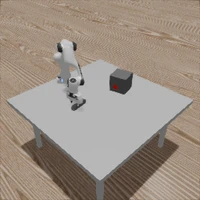


Learning 3D Particle-based Simulators from RGB-D Videos
Realistic simulation is critical for applications ranging from robotics to animation. Traditional analytic simulators sometimes struggle to capture sufficiently realistic simulation which can lead to problems including the well known "sim-to-real" gap in robotics. Learned simulators have emerged as an alternative for better capturing real-world physical dynamics, but require access to privileged ground truth physics information such as precise object geometry or particle tracks. Here we propose a method for learning simulators directly from observations. Visual Particle Dynamics (VPD) jointly learns a latent particle-based representation of 3D scenes, a neural simulator of the latent particle dynamics, and a renderer that can produce images of the scene from arbitrary views. VPD learns end to end from posed RGB-D videos and does not require access to privileged information. Unlike existing 2D video prediction models, we show that VPD's 3D structure enables scene editing and long-term predictions. These results pave the way for downstream applications ranging from video editing to robotic planning.
First Light and Reionisation Epoch Simulations (FLARES) XVII: Learning the galaxy-halo connection at high redshifts
Understanding the galaxy-halo relationship is not only key for elucidating the interplay between baryonic and dark matter, it is essential for creating large mock galaxy catalogues from N-body simulations. High-resolution hydrodynamical simulations are limited to small volumes by their large computational demands, hindering their use for comparisons with wide-field observational surveys. We overcome this limitation by using the First Light and Reionisation Epoch Simulations (FLARES), a suite of high-resolution (M_gas = 1.8 x 10^6 M_Sun) zoom simulations drawn from a large, (3.2 cGpc)^3 box. We use an extremely randomised trees machine learning approach to model the relationship between galaxies and their subhaloes in a wide range of environments. This allows us to build mock catalogues with dynamic ranges that surpass those obtainable through periodic simulations. The low cost of the zoom simulations facilitates multiple runs of the same regions, differing only in the random number seed of the subgrid models; changing this seed introduces a butterfly effect, leading to random differences in the properties of matching galaxies. This randomness cannot be learnt by a deterministic machine learning model, but by sampling the noise and adding it post-facto to our predictions, we are able to recover the distributions of the galaxy properties we predict (stellar mass, star formation rate, metallicity, and size) remarkably well. We also explore the resolution-dependence of our models' performances and find minimal depreciation down to particle resolutions of order M_DM ~ 10^8 M_Sun, enabling the future application of our models to large dark matter-only boxes.

Towards a Physics Foundation Model
Foundation models have revolutionized natural language processing through a ``train once, deploy anywhere'' paradigm, where a single pre-trained model adapts to countless downstream tasks without retraining. Access to a Physics Foundation Model (PFM) would be transformative -- democratizing access to high-fidelity simulations, accelerating scientific discovery, and eliminating the need for specialized solver development. Yet current physics-aware machine learning approaches remain fundamentally limited to single, narrow domains and require retraining for each new system. We present the General Physics Transformer (GPhyT), trained on 1.8 TB of diverse simulation data, that demonstrates foundation model capabilities are achievable for physics. Our key insight is that transformers can learn to infer governing dynamics from context, enabling a single model to simulate fluid-solid interactions, shock waves, thermal convection, and multi-phase dynamics without being told the underlying equations. GPhyT achieves three critical breakthroughs: (1) superior performance across multiple physics domains, outperforming specialized architectures by up to 29x, (2) zero-shot generalization to entirely unseen physical systems through in-context learning, and (3) stable long-term predictions through 50-timestep rollouts. By establishing that a single model can learn generalizable physical principles from data alone, this work opens the path toward a universal PFM that could transform computational science and engineering.
DreamMesh: Jointly Manipulating and Texturing Triangle Meshes for Text-to-3D Generation
Learning radiance fields (NeRF) with powerful 2D diffusion models has garnered popularity for text-to-3D generation. Nevertheless, the implicit 3D representations of NeRF lack explicit modeling of meshes and textures over surfaces, and such surface-undefined way may suffer from the issues, e.g., noisy surfaces with ambiguous texture details or cross-view inconsistency. To alleviate this, we present DreamMesh, a novel text-to-3D architecture that pivots on well-defined surfaces (triangle meshes) to generate high-fidelity explicit 3D model. Technically, DreamMesh capitalizes on a distinctive coarse-to-fine scheme. In the coarse stage, the mesh is first deformed by text-guided Jacobians and then DreamMesh textures the mesh with an interlaced use of 2D diffusion models in a tuning free manner from multiple viewpoints. In the fine stage, DreamMesh jointly manipulates the mesh and refines the texture map, leading to high-quality triangle meshes with high-fidelity textured materials. Extensive experiments demonstrate that DreamMesh significantly outperforms state-of-the-art text-to-3D methods in faithfully generating 3D content with richer textual details and enhanced geometry. Our project page is available at https://dreammesh.github.io.
Learning to Fly -- a Gym Environment with PyBullet Physics for Reinforcement Learning of Multi-agent Quadcopter Control
Robotic simulators are crucial for academic research and education as well as the development of safety-critical applications. Reinforcement learning environments -- simple simulations coupled with a problem specification in the form of a reward function -- are also important to standardize the development (and benchmarking) of learning algorithms. Yet, full-scale simulators typically lack portability and parallelizability. Vice versa, many reinforcement learning environments trade-off realism for high sample throughputs in toy-like problems. While public data sets have greatly benefited deep learning and computer vision, we still lack the software tools to simultaneously develop -- and fairly compare -- control theory and reinforcement learning approaches. In this paper, we propose an open-source OpenAI Gym-like environment for multiple quadcopters based on the Bullet physics engine. Its multi-agent and vision based reinforcement learning interfaces, as well as the support of realistic collisions and aerodynamic effects, make it, to the best of our knowledge, a first of its kind. We demonstrate its use through several examples, either for control (trajectory tracking with PID control, multi-robot flight with downwash, etc.) or reinforcement learning (single and multi-agent stabilization tasks), hoping to inspire future research that combines control theory and machine learning.
DreamHOI: Subject-Driven Generation of 3D Human-Object Interactions with Diffusion Priors
We present DreamHOI, a novel method for zero-shot synthesis of human-object interactions (HOIs), enabling a 3D human model to realistically interact with any given object based on a textual description. This task is complicated by the varying categories and geometries of real-world objects and the scarcity of datasets encompassing diverse HOIs. To circumvent the need for extensive data, we leverage text-to-image diffusion models trained on billions of image-caption pairs. We optimize the articulation of a skinned human mesh using Score Distillation Sampling (SDS) gradients obtained from these models, which predict image-space edits. However, directly backpropagating image-space gradients into complex articulation parameters is ineffective due to the local nature of such gradients. To overcome this, we introduce a dual implicit-explicit representation of a skinned mesh, combining (implicit) neural radiance fields (NeRFs) with (explicit) skeleton-driven mesh articulation. During optimization, we transition between implicit and explicit forms, grounding the NeRF generation while refining the mesh articulation. We validate our approach through extensive experiments, demonstrating its effectiveness in generating realistic HOIs.



Open-source Flux Transport (OFT). I. HipFT -- High-performance Flux Transport
Global solar photospheric magnetic maps play a critical role in solar and heliospheric physics research. Routine magnetograph measurements of the field occur only along the Sun-Earth line, leaving the far-side of the Sun unobserved. Surface Flux Transport (SFT) models attempt to mitigate this by modeling the surface evolution of the field. While such models have long been established in the community (with several releasing public full-Sun maps), none are open source. The Open Source Flux Transport (OFT) model seeks to fill this gap by providing an open and user-extensible SFT model that also builds on the knowledge of previous models with updated numerical and data acquisition/assimilation methods along with additional user-defined features. In this first of a series of papers on OFT, we introduce its computational core: the High-performance Flux Transport (HipFT) code (github.com/predsci/hipft). HipFT implements advection, diffusion, and data assimilation in a modular design that supports a variety of flow models and options. It can compute multiple realizations in a single run across model parameters to create ensembles of maps for uncertainty quantification and is high-performance through the use of multi-CPU and multi-GPU parallelism. HipFT is designed to enable users to easily write extensions, enhancing its flexibility and adaptability. We describe HipFT's model features, validations of its numerical methods, performance of its parallel and GPU-accelerated code implementation, analysis/post-processing options, and example use cases.
ASID: Active Exploration for System Identification in Robotic Manipulation
Model-free control strategies such as reinforcement learning have shown the ability to learn control strategies without requiring an accurate model or simulator of the world. While this is appealing due to the lack of modeling requirements, such methods can be sample inefficient, making them impractical in many real-world domains. On the other hand, model-based control techniques leveraging accurate simulators can circumvent these challenges and use a large amount of cheap simulation data to learn controllers that can effectively transfer to the real world. The challenge with such model-based techniques is the requirement for an extremely accurate simulation, requiring both the specification of appropriate simulation assets and physical parameters. This requires considerable human effort to design for every environment being considered. In this work, we propose a learning system that can leverage a small amount of real-world data to autonomously refine a simulation model and then plan an accurate control strategy that can be deployed in the real world. Our approach critically relies on utilizing an initial (possibly inaccurate) simulator to design effective exploration policies that, when deployed in the real world, collect high-quality data. We demonstrate the efficacy of this paradigm in identifying articulation, mass, and other physical parameters in several challenging robotic manipulation tasks, and illustrate that only a small amount of real-world data can allow for effective sim-to-real transfer. Project website at https://weirdlabuw.github.io/asid

PyNeRF: Pyramidal Neural Radiance Fields
Neural Radiance Fields (NeRFs) can be dramatically accelerated by spatial grid representations. However, they do not explicitly reason about scale and so introduce aliasing artifacts when reconstructing scenes captured at different camera distances. Mip-NeRF and its extensions propose scale-aware renderers that project volumetric frustums rather than point samples but such approaches rely on positional encodings that are not readily compatible with grid methods. We propose a simple modification to grid-based models by training model heads at different spatial grid resolutions. At render time, we simply use coarser grids to render samples that cover larger volumes. Our method can be easily applied to existing accelerated NeRF methods and significantly improves rendering quality (reducing error rates by 20-90% across synthetic and unbounded real-world scenes) while incurring minimal performance overhead (as each model head is quick to evaluate). Compared to Mip-NeRF, we reduce error rates by 20% while training over 60x faster.


An Efficient Graph-Transformer Operator for Learning Physical Dynamics with Manifolds Embedding
Accurate and efficient physical simulations are essential in science and engineering, yet traditional numerical solvers face significant challenges in computational cost when handling simulations across dynamic scenarios involving complex geometries, varying boundary/initial conditions, and diverse physical parameters. While deep learning offers promising alternatives, existing methods often struggle with flexibility and generalization, particularly on unstructured meshes, which significantly limits their practical applicability. To address these challenges, we propose PhysGTO, an efficient Graph-Transformer Operator for learning physical dynamics through explicit manifold embeddings in both physical and latent spaces. In the physical space, the proposed Unified Graph Embedding module aligns node-level conditions and constructs sparse yet structure-preserving graph connectivity to process heterogeneous inputs. In the latent space, PhysGTO integrates a lightweight flux-oriented message-passing scheme with projection-inspired attention to capture local and global dependencies, facilitating multilevel interactions among complex physical correlations. This design ensures linear complexity relative to the number of mesh points, reducing both the number of trainable parameters and computational costs in terms of floating-point operations (FLOPs), and thereby allowing efficient inference in real-time applications. We introduce a comprehensive benchmark spanning eleven datasets, covering problems with unstructured meshes, transient flow dynamics, and large-scale 3D geometries. PhysGTO consistently achieves state-of-the-art accuracy while significantly reducing computational costs, demonstrating superior flexibility, scalability, and generalization in a wide range of simulation tasks.

Reinforcement Learning for Adaptive Time-Stepping in the Chaotic Gravitational Three-Body Problem
Many problems in astrophysics cover multiple orders of magnitude in spatial and temporal scales. While simulating systems that experience rapid changes in these conditions, it is essential to adapt the (time-) step size to capture the behavior of the system during those rapid changes and use a less accurate time step at other, less demanding, moments. We encounter three problems with traditional methods. Firstly, making such changes requires expert knowledge of the astrophysics as well as of the details of the numerical implementation. Secondly, some parameters that determine the time-step size are fixed throughout the simulation, which means that they do not adapt to the rapidly changing conditions of the problem. Lastly, we would like the choice of time-step size to balance accuracy and computation effort. We address these challenges with Reinforcement Learning by training it to select the time-step size dynamically. We use the integration of a system of three equal-mass bodies that move due to their mutual gravity as an example of its application. With our method, the selected integration parameter adapts to the specific requirements of the problem, both in terms of computation time and accuracy while eliminating the expert knowledge needed to set up these simulations. Our method produces results competitive to existing methods and improve the results found with the most commonly-used values of time-step parameter. This method can be applied to other integrators without further retraining. We show that this extrapolation works for variable time-step integrators but does not perform to the desired accuracy for fixed time-step integrators.
PhysGen: Physically Grounded 3D Shape Generation for Industrial Design
Existing generative models for 3D shapes can synthesize high-fidelity and visually plausible shapes. For certain classes of shapes that have undergone an engineering design process, the realism of the shape is tightly coupled with the underlying physical properties, e.g., aerodynamic efficiency for automobiles. Since existing methods lack knowledge of such physics, they are unable to use this knowledge to enhance the realism of shape generation. Motivated by this, we propose a unified physics-based 3D shape generation pipeline, with a focus on industrial design applications. Specifically, we introduce a new flow matching model with explicit physical guidance, consisting of an alternating update process. We iteratively perform a velocity-based update and a physics-based refinement, progressively adjusting the latent code to align with the desired 3D shapes and physical properties. We further strengthen physical validity by incorporating a physics-aware regularization term into the velocity-based update step. To support such physics-guided updates, we build a shape-and-physics variational autoencoder (SP-VAE) that jointly encodes shape and physics information into a unified latent space. The experiments on three benchmarks show that this synergistic formulation improves shape realism beyond mere visual plausibility.
PEGNet: A Physics-Embedded Graph Network for Long-Term Stable Multiphysics Simulation
Accurate and efficient simulations of physical phenomena governed by partial differential equations (PDEs) are important for scientific and engineering progress. While traditional numerical solvers are powerful, they are often computationally expensive. Recently, data-driven methods have emerged as alternatives, but they frequently suffer from error accumulation and limited physical consistency, especially in multiphysics and complex geometries. To address these challenges, we propose PEGNet, a Physics-Embedded Graph Network that incorporates PDE-guided message passing to redesign the graph neural network architecture. By embedding key PDE dynamics like convection, viscosity, and diffusion into distinct message functions, the model naturally integrates physical constraints into its forward propagation, producing more stable and physically consistent solutions. Additionally, a hierarchical architecture is employed to capture multi-scale features, and physical regularization is integrated into the loss function to further enforce adherence to governing physics. We evaluated PEGNet on benchmarks, including custom datasets for respiratory airflow and drug delivery, showing significant improvements in long-term prediction accuracy and physical consistency over existing methods. Our code is available at https://github.com/Yanghuoshan/PEGNet.
Dynamic Mesh-Aware Radiance Fields
Embedding polygonal mesh assets within photorealistic Neural Radience Fields (NeRF) volumes, such that they can be rendered and their dynamics simulated in a physically consistent manner with the NeRF, is under-explored from the system perspective of integrating NeRF into the traditional graphics pipeline. This paper designs a two-way coupling between mesh and NeRF during rendering and simulation. We first review the light transport equations for both mesh and NeRF, then distill them into an efficient algorithm for updating radiance and throughput along a cast ray with an arbitrary number of bounces. To resolve the discrepancy between the linear color space that the path tracer assumes and the sRGB color space that standard NeRF uses, we train NeRF with High Dynamic Range (HDR) images. We also present a strategy to estimate light sources and cast shadows on the NeRF. Finally, we consider how the hybrid surface-volumetric formulation can be efficiently integrated with a high-performance physics simulator that supports cloth, rigid and soft bodies. The full rendering and simulation system can be run on a GPU at interactive rates. We show that a hybrid system approach outperforms alternatives in visual realism for mesh insertion, because it allows realistic light transport from volumetric NeRF media onto surfaces, which affects the appearance of reflective/refractive surfaces and illumination of diffuse surfaces informed by the dynamic scene.


WildSmoke: Ready-to-Use Dynamic 3D Smoke Assets from a Single Video in the Wild
We propose a pipeline to extract and reconstruct dynamic 3D smoke assets from a single in-the-wild video, and further integrate interactive simulation for smoke design and editing. Recent developments in 3D vision have significantly improved reconstructing and rendering fluid dynamics, supporting realistic and temporally consistent view synthesis. However, current fluid reconstructions rely heavily on carefully controlled clean lab environments, whereas real-world videos captured in the wild are largely underexplored. We pinpoint three key challenges of reconstructing smoke in real-world videos and design targeted techniques, including smoke extraction with background removal, initialization of smoke particles and camera poses, and inferring multi-view videos. Our method not only outperforms previous reconstruction and generation methods with high-quality smoke reconstructions (+2.22 average PSNR on wild videos), but also enables diverse and realistic editing of fluid dynamics by simulating our smoke assets. We provide our models, data, and 4D smoke assets at [https://autumnyq.github.io/WildSmoke](https://autumnyq.github.io/WildSmoke).

CFDLLMBench: A Benchmark Suite for Evaluating Large Language Models in Computational Fluid Dynamics
Large Language Models (LLMs) have demonstrated strong performance across general NLP tasks, but their utility in automating numerical experiments of complex physical system -- a critical and labor-intensive component -- remains underexplored. As the major workhorse of computational science over the past decades, Computational Fluid Dynamics (CFD) offers a uniquely challenging testbed for evaluating the scientific capabilities of LLMs. We introduce CFDLLMBench, a benchmark suite comprising three complementary components -- CFDQuery, CFDCodeBench, and FoamBench -- designed to holistically evaluate LLM performance across three key competencies: graduate-level CFD knowledge, numerical and physical reasoning of CFD, and context-dependent implementation of CFD workflows. Grounded in real-world CFD practices, our benchmark combines a detailed task taxonomy with a rigorous evaluation framework to deliver reproducible results and quantify LLM performance across code executability, solution accuracy, and numerical convergence behavior. CFDLLMBench establishes a solid foundation for the development and evaluation of LLM-driven automation of numerical experiments for complex physical systems. Code and data are available at https://github.com/NREL-Theseus/cfdllmbench/.
A Neural PDE Solver with Temporal Stencil Modeling
Numerical simulation of non-linear partial differential equations plays a crucial role in modeling physical science and engineering phenomena, such as weather, climate, and aerodynamics. Recent Machine Learning (ML) models trained on low-resolution spatio-temporal signals have shown new promises in capturing important dynamics in high-resolution signals, under the condition that the models can effectively recover the missing details. However, this study shows that significant information is often lost in the low-resolution down-sampled features. To address such issues, we propose a new approach, namely Temporal Stencil Modeling (TSM), which combines the strengths of advanced time-series sequence modeling (with the HiPPO features) and state-of-the-art neural PDE solvers (with learnable stencil modeling). TSM aims to recover the lost information from the PDE trajectories and can be regarded as a temporal generalization of classic finite volume methods such as WENO. Our experimental results show that TSM achieves the new state-of-the-art simulation accuracy for 2-D incompressible Navier-Stokes turbulent flows: it significantly outperforms the previously reported best results by 19.9% in terms of the highly-correlated duration time and reduces the inference latency into 80%. We also show a strong generalization ability of the proposed method to various out-of-distribution turbulent flow settings. Our code is available at "https://github.com/Edward-Sun/TSM-PDE".
ViSA: 3D-Aware Video Shading for Real-Time Upper-Body Avatar Creation
Generating high-fidelity upper-body 3D avatars from one-shot input image remains a significant challenge. Current 3D avatar generation methods, which rely on large reconstruction models, are fast and capable of producing stable body structures, but they often suffer from artifacts such as blurry textures and stiff, unnatural motion. In contrast, generative video models show promising performance by synthesizing photorealistic and dynamic results, but they frequently struggle with unstable behavior, including body structural errors and identity drift. To address these limitations, we propose a novel approach that combines the strengths of both paradigms. Our framework employs a 3D reconstruction model to provide robust structural and appearance priors, which in turn guides a real-time autoregressive video diffusion model for rendering. This process enables the model to synthesize high-frequency, photorealistic details and fluid dynamics in real time, effectively reducing texture blur and motion stiffness while preventing the structural inconsistencies common in video generation methods. By uniting the geometric stability of 3D reconstruction with the generative capabilities of video models, our method produces high-fidelity digital avatars with realistic appearance and dynamic, temporally coherent motion. Experiments demonstrate that our approach significantly reduces artifacts and achieves substantial improvements in visual quality over leading methods, providing a robust and efficient solution for real-time applications such as gaming and virtual reality. Project page: https://lhyfst.github.io/visa
SpaceControl: Introducing Test-Time Spatial Control to 3D Generative Modeling
Generative methods for 3D assets have recently achieved remarkable progress, yet providing intuitive and precise control over the object geometry remains a key challenge. Existing approaches predominantly rely on text or image prompts, which often fall short in geometric specificity: language can be ambiguous, and images are cumbersome to edit. In this work, we introduce SpaceControl, a training-free test-time method for explicit spatial control of 3D generation. Our approach accepts a wide range of geometric inputs, from coarse primitives to detailed meshes, and integrates seamlessly with modern pre-trained generative models without requiring any additional training. A controllable parameter lets users trade off between geometric fidelity and output realism. Extensive quantitative evaluation and user studies demonstrate that SpaceControl outperforms both training-based and optimization-based baselines in geometric faithfulness while preserving high visual quality. Finally, we present an interactive user interface that enables online editing of superquadrics for direct conversion into textured 3D assets, facilitating practical deployment in creative workflows. Find our project page at https://spacecontrol3d.github.io/

Consistent3D: Towards Consistent High-Fidelity Text-to-3D Generation with Deterministic Sampling Prior
Score distillation sampling (SDS) and its variants have greatly boosted the development of text-to-3D generation, but are vulnerable to geometry collapse and poor textures yet. To solve this issue, we first deeply analyze the SDS and find that its distillation sampling process indeed corresponds to the trajectory sampling of a stochastic differential equation (SDE): SDS samples along an SDE trajectory to yield a less noisy sample which then serves as a guidance to optimize a 3D model. However, the randomness in SDE sampling often leads to a diverse and unpredictable sample which is not always less noisy, and thus is not a consistently correct guidance, explaining the vulnerability of SDS. Since for any SDE, there always exists an ordinary differential equation (ODE) whose trajectory sampling can deterministically and consistently converge to the desired target point as the SDE, we propose a novel and effective "Consistent3D" method that explores the ODE deterministic sampling prior for text-to-3D generation. Specifically, at each training iteration, given a rendered image by a 3D model, we first estimate its desired 3D score function by a pre-trained 2D diffusion model, and build an ODE for trajectory sampling. Next, we design a consistency distillation sampling loss which samples along the ODE trajectory to generate two adjacent samples and uses the less noisy sample to guide another more noisy one for distilling the deterministic prior into the 3D model. Experimental results show the efficacy of our Consistent3D in generating high-fidelity and diverse 3D objects and large-scale scenes, as shown in Fig. 1. The codes are available at https://github.com/sail-sg/Consistent3D.

Force Prompting: Video Generation Models Can Learn and Generalize Physics-based Control Signals
Recent advances in video generation models have sparked interest in world models capable of simulating realistic environments. While navigation has been well-explored, physically meaningful interactions that mimic real-world forces remain largely understudied. In this work, we investigate using physical forces as a control signal for video generation and propose force prompts which enable users to interact with images through both localized point forces, such as poking a plant, and global wind force fields, such as wind blowing on fabric. We demonstrate that these force prompts can enable videos to respond realistically to physical control signals by leveraging the visual and motion prior in the original pretrained model, without using any 3D asset or physics simulator at inference. The primary challenge of force prompting is the difficulty in obtaining high quality paired force-video training data, both in the real world due to the difficulty of obtaining force signals, and in synthetic data due to limitations in the visual quality and domain diversity of physics simulators. Our key finding is that video generation models can generalize remarkably well when adapted to follow physical force conditioning from videos synthesized by Blender, even with limited demonstrations of few objects. Our method can generate videos which simulate forces across diverse geometries, settings, and materials. We also try to understand the source of this generalization and perform ablations that reveal two key elements: visual diversity and the use of specific text keywords during training. Our approach is trained on only around 15k training examples for a single day on four A100 GPUs, and outperforms existing methods on force adherence and physics realism, bringing world models closer to real-world physics interactions. We release all datasets, code, weights, and interactive video demos at our project page.

Vision-Based Terrain Relative Navigation on High-Altitude Balloon and Sub-Orbital Rocket
We present an experimental analysis on the use of a camera-based approach for high-altitude navigation by associating mapped landmarks from a satellite image database to camera images, and by leveraging inertial sensors between camera frames. We evaluate performance of both a sideways-tilted and downward-facing camera on data collected from a World View Enterprises high-altitude balloon with data beginning at an altitude of 33 km and descending to near ground level (4.5 km) with 1.5 hours of flight time. We demonstrate less than 290 meters of average position error over a trajectory of more than 150 kilometers. In addition to showing performance across a range of altitudes, we also demonstrate the robustness of the Terrain Relative Navigation (TRN) method to rapid rotations of the balloon, in some cases exceeding 20 degrees per second, and to camera obstructions caused by both cloud coverage and cords swaying underneath the balloon. Additionally, we evaluate performance on data collected by two cameras inside the capsule of Blue Origin's New Shepard rocket on payload flight NS-23, traveling at speeds up to 880 km/hr, and demonstrate less than 55 meters of average position error.
DreamPropeller: Supercharge Text-to-3D Generation with Parallel Sampling
Recent methods such as Score Distillation Sampling (SDS) and Variational Score Distillation (VSD) using 2D diffusion models for text-to-3D generation have demonstrated impressive generation quality. However, the long generation time of such algorithms significantly degrades the user experience. To tackle this problem, we propose DreamPropeller, a drop-in acceleration algorithm that can be wrapped around any existing text-to-3D generation pipeline based on score distillation. Our framework generalizes Picard iterations, a classical algorithm for parallel sampling an ODE path, and can account for non-ODE paths such as momentum-based gradient updates and changes in dimensions during the optimization process as in many cases of 3D generation. We show that our algorithm trades parallel compute for wallclock time and empirically achieves up to 4.7x speedup with a negligible drop in generation quality for all tested frameworks.
RealPDEBench: A Benchmark for Complex Physical Systems with Real-World Data
Predicting the evolution of complex physical systems remains a central problem in science and engineering. Despite rapid progress in scientific Machine Learning (ML) models, a critical bottleneck is the lack of expensive real-world data, resulting in most current models being trained and validated on simulated data. Beyond limiting the development and evaluation of scientific ML, this gap also hinders research into essential tasks such as sim-to-real transfer. We introduce RealPDEBench, the first benchmark for scientific ML that integrates real-world measurements with paired numerical simulations. RealPDEBench consists of five datasets, three tasks, eight metrics, and ten baselines. We first present five real-world measured datasets with paired simulated datasets across different complex physical systems. We further define three tasks, which allow comparisons between real-world and simulated data, and facilitate the development of methods to bridge the two. Moreover, we design eight evaluation metrics, spanning data-oriented and physics-oriented metrics, and finally benchmark ten representative baselines, including state-of-the-art models, pretrained PDE foundation models, and a traditional method. Experiments reveal significant discrepancies between simulated and real-world data, while showing that pretraining with simulated data consistently improves both accuracy and convergence. In this work, we hope to provide insights from real-world data, advancing scientific ML toward bridging the sim-to-real gap and real-world deployment. Our benchmark, datasets, and instructions are available at https://realpdebench.github.io/.
EpiGRAF: Rethinking training of 3D GANs
A very recent trend in generative modeling is building 3D-aware generators from 2D image collections. To induce the 3D bias, such models typically rely on volumetric rendering, which is expensive to employ at high resolutions. During the past months, there appeared more than 10 works that address this scaling issue by training a separate 2D decoder to upsample a low-resolution image (or a feature tensor) produced from a pure 3D generator. But this solution comes at a cost: not only does it break multi-view consistency (i.e. shape and texture change when the camera moves), but it also learns the geometry in a low fidelity. In this work, we show that it is possible to obtain a high-resolution 3D generator with SotA image quality by following a completely different route of simply training the model patch-wise. We revisit and improve this optimization scheme in two ways. First, we design a location- and scale-aware discriminator to work on patches of different proportions and spatial positions. Second, we modify the patch sampling strategy based on an annealed beta distribution to stabilize training and accelerate the convergence. The resulted model, named EpiGRAF, is an efficient, high-resolution, pure 3D generator, and we test it on four datasets (two introduced in this work) at 256^2 and 512^2 resolutions. It obtains state-of-the-art image quality, high-fidelity geometry and trains {approx} 2.5 times faster than the upsampler-based counterparts. Project website: https://universome.github.io/epigraf.
MixRT: Mixed Neural Representations For Real-Time NeRF Rendering
Neural Radiance Field (NeRF) has emerged as a leading technique for novel view synthesis, owing to its impressive photorealistic reconstruction and rendering capability. Nevertheless, achieving real-time NeRF rendering in large-scale scenes has presented challenges, often leading to the adoption of either intricate baked mesh representations with a substantial number of triangles or resource-intensive ray marching in baked representations. We challenge these conventions, observing that high-quality geometry, represented by meshes with substantial triangles, is not necessary for achieving photorealistic rendering quality. Consequently, we propose MixRT, a novel NeRF representation that includes a low-quality mesh, a view-dependent displacement map, and a compressed NeRF model. This design effectively harnesses the capabilities of existing graphics hardware, thus enabling real-time NeRF rendering on edge devices. Leveraging a highly-optimized WebGL-based rendering framework, our proposed MixRT attains real-time rendering speeds on edge devices (over 30 FPS at a resolution of 1280 x 720 on a MacBook M1 Pro laptop), better rendering quality (0.2 PSNR higher in indoor scenes of the Unbounded-360 datasets), and a smaller storage size (less than 80% compared to state-of-the-art methods).



DSO: Aligning 3D Generators with Simulation Feedback for Physical Soundness
Most 3D object generators focus on aesthetic quality, often neglecting physical constraints necessary in applications. One such constraint is that the 3D object should be self-supporting, i.e., remains balanced under gravity. Prior approaches to generating stable 3D objects used differentiable physics simulators to optimize geometry at test-time, which is slow, unstable, and prone to local optima. Inspired by the literature on aligning generative models to external feedback, we propose Direct Simulation Optimization (DSO), a framework to use the feedback from a (non-differentiable) simulator to increase the likelihood that the 3D generator outputs stable 3D objects directly. We construct a dataset of 3D objects labeled with a stability score obtained from the physics simulator. We can then fine-tune the 3D generator using the stability score as the alignment metric, via direct preference optimization (DPO) or direct reward optimization (DRO), a novel objective, which we introduce, to align diffusion models without requiring pairwise preferences. Our experiments show that the fine-tuned feed-forward generator, using either DPO or DRO objective, is much faster and more likely to produce stable objects than test-time optimization. Notably, the DSO framework works even without any ground-truth 3D objects for training, allowing the 3D generator to self-improve by automatically collecting simulation feedback on its own outputs.
Reduced-Order Neural Operators: Learning Lagrangian Dynamics on Highly Sparse Graphs
We present a neural operator architecture to simulate Lagrangian dynamics, such as fluid flow, granular flows, and elastoplasticity. Traditional numerical methods, such as the finite element method (FEM), suffer from long run times and large memory consumption. On the other hand, approaches based on graph neural networks are faster but still suffer from long computation times on dense graphs, which are often required for high-fidelity simulations. Our model, GIOROM or Graph Interaction Operator for Reduced-Order Modeling, learns temporal dynamics within a reduced-order setting, capturing spatial features from a highly sparse graph representation of the input and generalizing to arbitrary spatial locations during inference. The model is geometry-aware and discretization-agnostic and can generalize to different initial conditions, velocities, and geometries after training. We show that point clouds of the order of 100,000 points can be inferred from sparse graphs with sim1000 points, with negligible change in computation time. We empirically evaluate our model on elastic solids, Newtonian fluids, Non-Newtonian fluids, Drucker-Prager granular flows, and von Mises elastoplasticity. On these benchmarks, our approach results in a 25times speedup compared to other neural network-based physics simulators while delivering high-fidelity predictions of complex physical systems and showing better performance on most benchmarks. The code and the demos are provided at https://github.com/HrishikeshVish/GIOROM.

Re-Simulation-based Self-Supervised Learning for Pre-Training Foundation Models
Self-Supervised Learning (SSL) is at the core of training modern large machine learning models, providing a scheme for learning powerful representations that can be used in a variety of downstream tasks. However, SSL strategies must be adapted to the type of training data and downstream tasks required. We propose RS3L ("Re-simulation-based self-supervised representation learning"), a novel simulation-based SSL strategy that employs a method of re-simulation to drive data augmentation for contrastive learning in the physical sciences, particularly, in fields that rely on stochastic simulators. By intervening in the middle of the simulation process and re-running simulation components downstream of the intervention, we generate multiple realizations of an event, thus producing a set of augmentations covering all physics-driven variations available in the simulator. Using experiments from high-energy physics, we explore how this strategy may enable the development of a foundation model; we show how RS3L pre-training enables powerful performance in downstream tasks such as discrimination of a variety of objects and uncertainty mitigation. In addition to our results, we make the RS3L dataset publicly available for further studies on how to improve SSL strategies.
Is One Epoch All You Need For Multi-Fidelity Hyperparameter Optimization?
Hyperparameter optimization (HPO) is crucial for fine-tuning machine learning models but can be computationally expensive. To reduce costs, Multi-fidelity HPO (MF-HPO) leverages intermediate accuracy levels in the learning process and discards low-performing models early on. We compared various representative MF-HPO methods against a simple baseline on classical benchmark data. The baseline involved discarding all models except the Top-K after training for only one epoch, followed by further training to select the best model. Surprisingly, this baseline achieved similar results to its counterparts, while requiring an order of magnitude less computation. Upon analyzing the learning curves of the benchmark data, we observed a few dominant learning curves, which explained the success of our baseline. This suggests that researchers should (1) always use the suggested baseline in benchmarks and (2) broaden the diversity of MF-HPO benchmarks to include more complex cases.

Magic3D: High-Resolution Text-to-3D Content Creation
DreamFusion has recently demonstrated the utility of a pre-trained text-to-image diffusion model to optimize Neural Radiance Fields (NeRF), achieving remarkable text-to-3D synthesis results. However, the method has two inherent limitations: (a) extremely slow optimization of NeRF and (b) low-resolution image space supervision on NeRF, leading to low-quality 3D models with a long processing time. In this paper, we address these limitations by utilizing a two-stage optimization framework. First, we obtain a coarse model using a low-resolution diffusion prior and accelerate with a sparse 3D hash grid structure. Using the coarse representation as the initialization, we further optimize a textured 3D mesh model with an efficient differentiable renderer interacting with a high-resolution latent diffusion model. Our method, dubbed Magic3D, can create high quality 3D mesh models in 40 minutes, which is 2x faster than DreamFusion (reportedly taking 1.5 hours on average), while also achieving higher resolution. User studies show 61.7% raters to prefer our approach over DreamFusion. Together with the image-conditioned generation capabilities, we provide users with new ways to control 3D synthesis, opening up new avenues to various creative applications.


Quad2Plane: An Intermediate Training Procedure for Online Exploration in Aerial Robotics via Receding Horizon Control
Data driven robotics relies upon accurate real-world representations to learn useful policies. Despite our best-efforts, zero-shot sim-to-real transfer is still an unsolved problem, and we often need to allow our agents to explore online to learn useful policies for a given task. For many applications of field robotics online exploration is prohibitively expensive and dangerous, this is especially true in fixed-wing aerial robotics. To address these challenges we offer an intermediary solution for learning in field robotics. We investigate the use of dissimilar platform vehicle for learning and offer a procedure to mimic the behavior of one vehicle with another. We specifically consider the problem of training fixed-wing aircraft, an expensive and dangerous vehicle type, using a multi-rotor host platform. Using a Model Predictive Control approach, we design a controller capable of mimicking another vehicles behavior in both simulation and the real-world.
When to Trust Your Simulator: Dynamics-Aware Hybrid Offline-and-Online Reinforcement Learning
Learning effective reinforcement learning (RL) policies to solve real-world complex tasks can be quite challenging without a high-fidelity simulation environment. In most cases, we are only given imperfect simulators with simplified dynamics, which inevitably lead to severe sim-to-real gaps in RL policy learning. The recently emerged field of offline RL provides another possibility to learn policies directly from pre-collected historical data. However, to achieve reasonable performance, existing offline RL algorithms need impractically large offline data with sufficient state-action space coverage for training. This brings up a new question: is it possible to combine learning from limited real data in offline RL and unrestricted exploration through imperfect simulators in online RL to address the drawbacks of both approaches? In this study, we propose the Dynamics-Aware Hybrid Offline-and-Online Reinforcement Learning (H2O) framework to provide an affirmative answer to this question. H2O introduces a dynamics-aware policy evaluation scheme, which adaptively penalizes the Q function learning on simulated state-action pairs with large dynamics gaps, while also simultaneously allowing learning from a fixed real-world dataset. Through extensive simulation and real-world tasks, as well as theoretical analysis, we demonstrate the superior performance of H2O against other cross-domain online and offline RL algorithms. H2O provides a brand new hybrid offline-and-online RL paradigm, which can potentially shed light on future RL algorithm design for solving practical real-world tasks.
SMART: A Surrogate Model for Predicting Application Runtime in Dragonfly Systems
The Dragonfly network, with its high-radix and low-diameter structure, is a leading interconnect in high-performance computing. A major challenge is workload interference on shared network links. Parallel discrete event simulation (PDES) is commonly used to analyze workload interference. However, high-fidelity PDES is computationally expensive, making it impractical for large-scale or real-time scenarios. Hybrid simulation that incorporates data-driven surrogate models offers a promising alternative, especially for forecasting application runtime, a task complicated by the dynamic behavior of network traffic. We present \ourmodel, a surrogate model that combines graph neural networks (GNNs) and large language models (LLMs) to capture both spatial and temporal patterns from port level router data. \ourmodel outperforms existing statistical and machine learning baselines, enabling accurate runtime prediction and supporting efficient hybrid simulation of Dragonfly networks.
SOUS VIDE: Cooking Visual Drone Navigation Policies in a Gaussian Splatting Vacuum
We propose a new simulator, training approach, and policy architecture, collectively called SOUS VIDE, for end-to-end visual drone navigation. Our trained policies exhibit zero-shot sim-to-real transfer with robust real-world performance using only onboard perception and computation. Our simulator, called FiGS, couples a computationally simple drone dynamics model with a high visual fidelity Gaussian Splatting scene reconstruction. FiGS can quickly simulate drone flights producing photorealistic images at up to 130 fps. We use FiGS to collect 100k-300k image/state-action pairs from an expert MPC with privileged state and dynamics information, randomized over dynamics parameters and spatial disturbances. We then distill this expert MPC into an end-to-end visuomotor policy with a lightweight neural architecture, called SV-Net. SV-Net processes color image, optical flow and IMU data streams into low-level thrust and body rate commands at 20 Hz onboard a drone. Crucially, SV-Net includes a learned module for low-level control that adapts at runtime to variations in drone dynamics. In a campaign of 105 hardware experiments, we show SOUS VIDE policies to be robust to 30% mass variations, 40 m/s wind gusts, 60% changes in ambient brightness, shifting or removing objects from the scene, and people moving aggressively through the drone's visual field. Code, data, and experiment videos can be found on our project page: https://stanfordmsl.github.io/SousVide/.


Bridging Geometry-Coherent Text-to-3D Generation with Multi-View Diffusion Priors and Gaussian Splatting
Score Distillation Sampling (SDS) leverages pretrained 2D diffusion models to advance text-to-3D generation but neglects multi-view correlations, being prone to geometric inconsistencies and multi-face artifacts in the generated 3D content. In this work, we propose Coupled Score Distillation (CSD), a framework that couples multi-view joint distribution priors to ensure geometrically consistent 3D generation while enabling the stable and direct optimization of 3D Gaussian Splatting. Specifically, by reformulating the optimization as a multi-view joint optimization problem, we derive an effective optimization rule that effectively couples multi-view priors to guide optimization across different viewpoints while preserving the diversity of generated 3D assets. Additionally, we propose a framework that directly optimizes 3D Gaussian Splatting (3D-GS) with random initialization to generate geometrically consistent 3D content. We further employ a deformable tetrahedral grid, initialized from 3D-GS and refined through CSD, to produce high-quality, refined meshes. Quantitative and qualitative experimental results demonstrate the efficiency and competitive quality of our approach.
HiFlow: Training-free High-Resolution Image Generation with Flow-Aligned Guidance
Text-to-image (T2I) diffusion/flow models have drawn considerable attention recently due to their remarkable ability to deliver flexible visual creations. Still, high-resolution image synthesis presents formidable challenges due to the scarcity and complexity of high-resolution content. To this end, we present HiFlow, a training-free and model-agnostic framework to unlock the resolution potential of pre-trained flow models. Specifically, HiFlow establishes a virtual reference flow within the high-resolution space that effectively captures the characteristics of low-resolution flow information, offering guidance for high-resolution generation through three key aspects: initialization alignment for low-frequency consistency, direction alignment for structure preservation, and acceleration alignment for detail fidelity. By leveraging this flow-aligned guidance, HiFlow substantially elevates the quality of high-resolution image synthesis of T2I models and demonstrates versatility across their personalized variants. Extensive experiments validate HiFlow's superiority in achieving superior high-resolution image quality over current state-of-the-art methods.


The Well: a Large-Scale Collection of Diverse Physics Simulations for Machine Learning
Machine learning based surrogate models offer researchers powerful tools for accelerating simulation-based workflows. However, as standard datasets in this space often cover small classes of physical behavior, it can be difficult to evaluate the efficacy of new approaches. To address this gap, we introduce the Well: a large-scale collection of datasets containing numerical simulations of a wide variety of spatiotemporal physical systems. The Well draws from domain experts and numerical software developers to provide 15TB of data across 16 datasets covering diverse domains such as biological systems, fluid dynamics, acoustic scattering, as well as magneto-hydrodynamic simulations of extra-galactic fluids or supernova explosions. These datasets can be used individually or as part of a broader benchmark suite. To facilitate usage of the Well, we provide a unified PyTorch interface for training and evaluating models. We demonstrate the function of this library by introducing example baselines that highlight the new challenges posed by the complex dynamics of the Well. The code and data is available at https://github.com/PolymathicAI/the_well.


